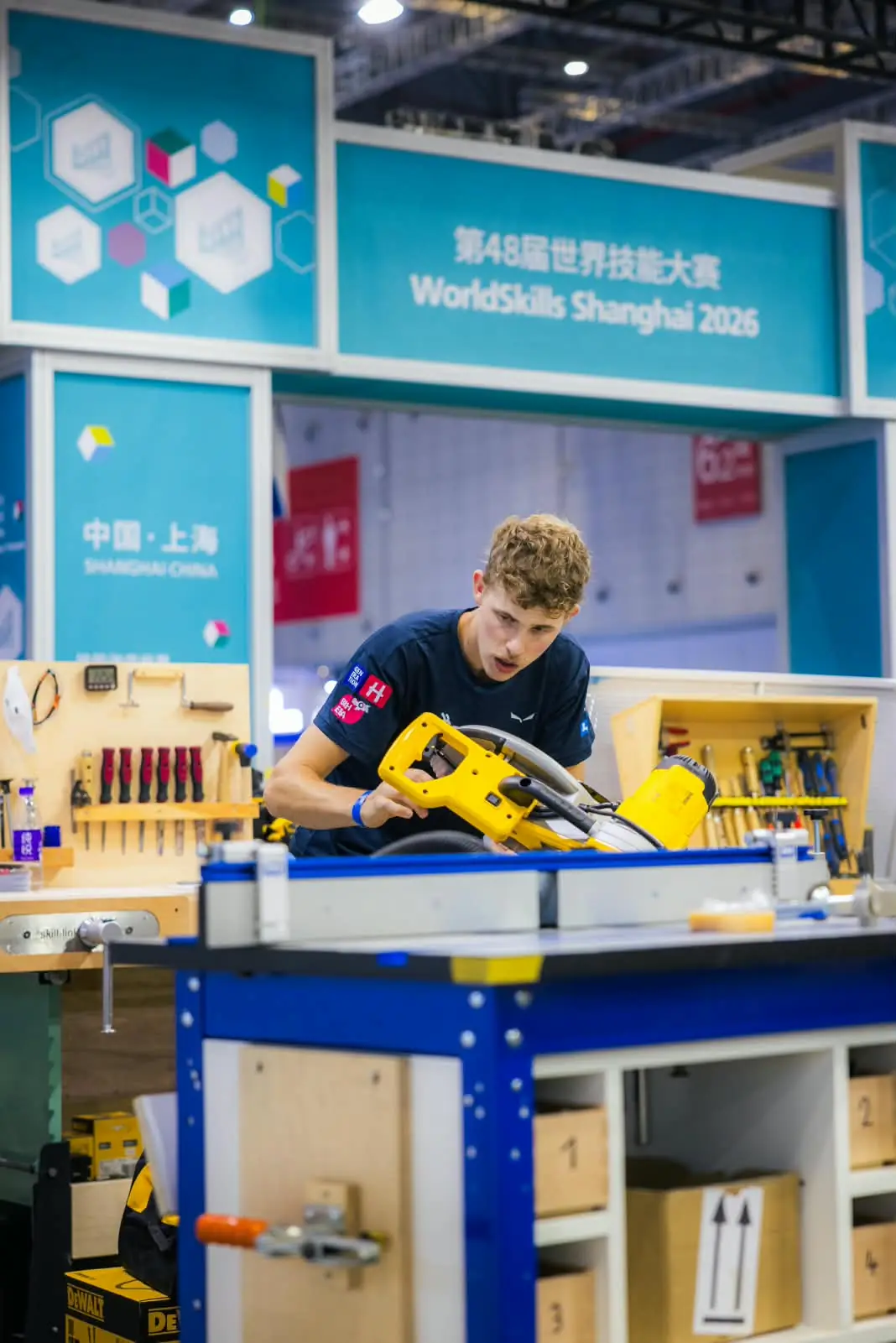
WorldSkills Shanghai 2026
Main sponsor of the Italian national woodworking team
When the art of woodworking
becomes a global challenge
There are competitions that cannot be won by sheer strength.
They are won with a steady hand, a trained eye and a clear head when the clock is ticking and every millimetre can decide the outcome.
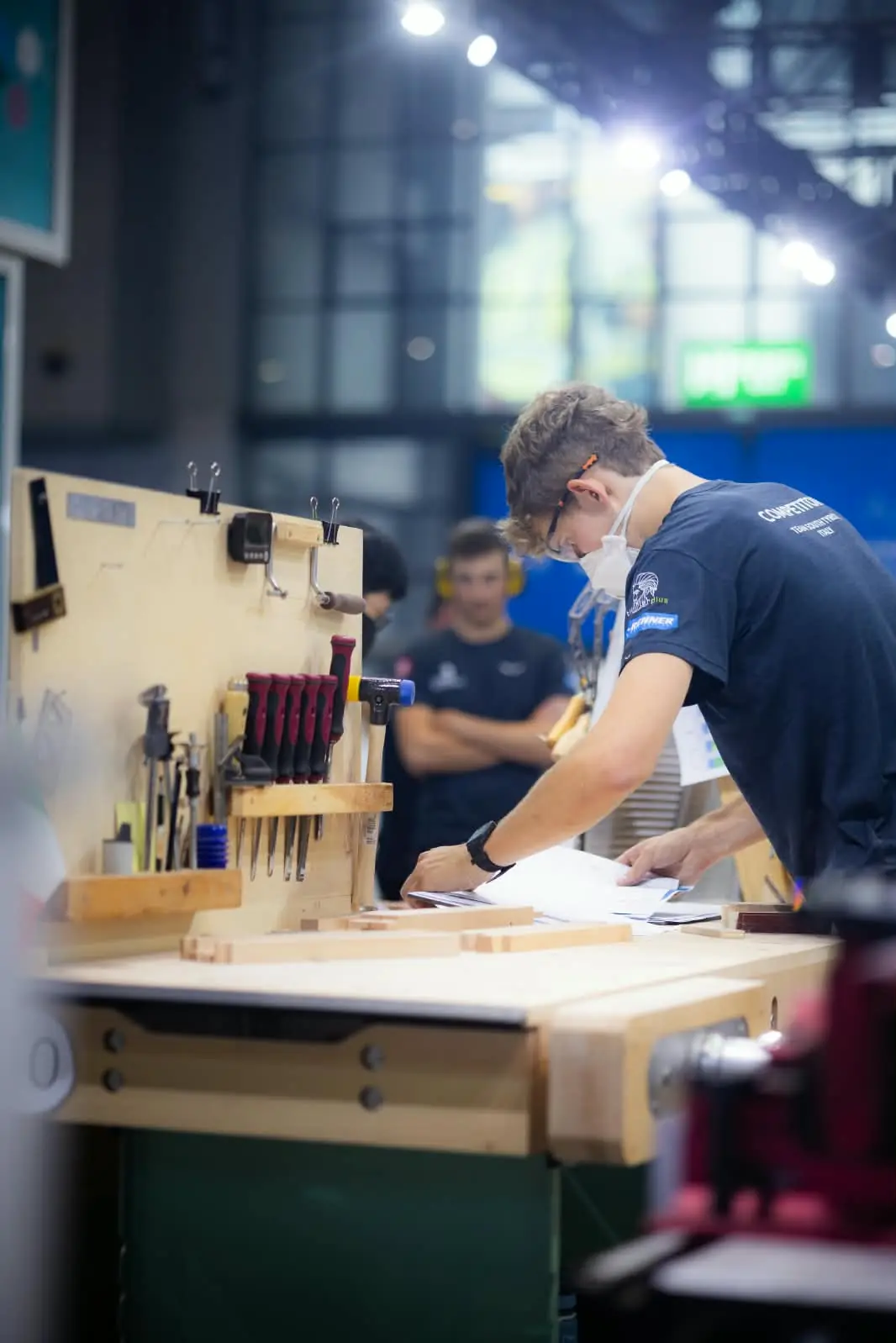
At WorldSkills Shanghai 2026, there will be no soccer players, race car drivers, or sprinters taking the stage. Instead, it will be the trades. And among them will be Italian woodworking: a discipline that combines technical drawing, joinery, planing, finishing, assembly, and absolute precision.
Renner Italia stands alongside the Italian team of woodworkers as they prepare for the world championship in Shanghai.
It is a clear commitment: to support Italian woodworking as one of the finest, most tangible, and most skilled expressions of Made in Italy. It means standing alongside those who know wood, respect it, work with it, and transform it into beauty.
It means investing in the young people who will carry this culture forward. It means giving visibility to a craft that belongs to the present and the future of our country.
The Stage:
WorldSkills, the WorldSkills Competition
WorldSkills was founded in the aftermath of the Second World War, in a Europe that needed to rebuild not only its buildings, but also its skills, its workforce and its confidence. The first international competition took place in Madrid in 1950, between young professionals from Spain and Portugal. Since then, that competition has grown into a global movement: a platform where skilled trades are showcased to the world with the same respect accorded to major sporting disciplines.
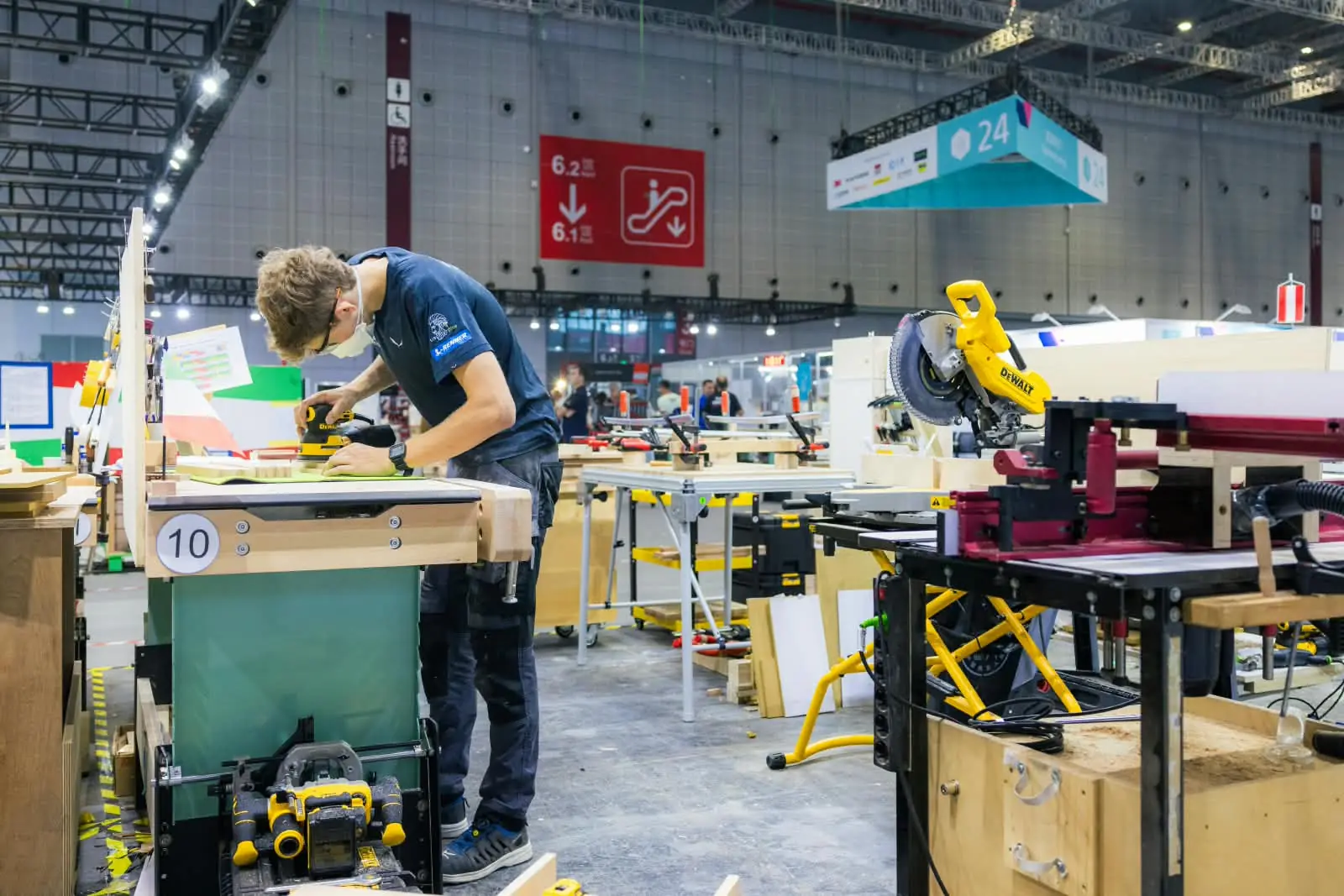
From 22 to 27 September 2026, Shanghai hosted the 48th WorldSkills Competition. It was one of the world’s greatest celebrations of vocational skills: young talents, schools, businesses, trainers, technicians and international observers came together to assess the level of practical knowledge that drives economies forward.
Because WorldSkills is not simply a competition. It is a barometer of the quality of training, of technical culture, and of a region’s ability to prepare people capable of excelling. In a society that talks a great deal about innovation, WorldSkills reminds us of an essential truth: innovation needs skilled hands.
Woodworking:
the craft where detail determines the outcome
The woodworking category, or cabinetmaking, is one of the most representative in the WorldSkills universe. In this discipline, it’s not enough to simply “know how to make a piece of furniture.” You must interpret a design, select and work with materials, use machines and tools safely, construct perfect components, create joints, assemble, finish, and inspect. The official WorldSkills discipline describes woodworking as the ability to work with wood to create high-quality furniture and units, combining technical expertise with an aesthetic understanding of design and finish.
It’s a competition against others, of course. But first and foremost, it’s a competition of skill.
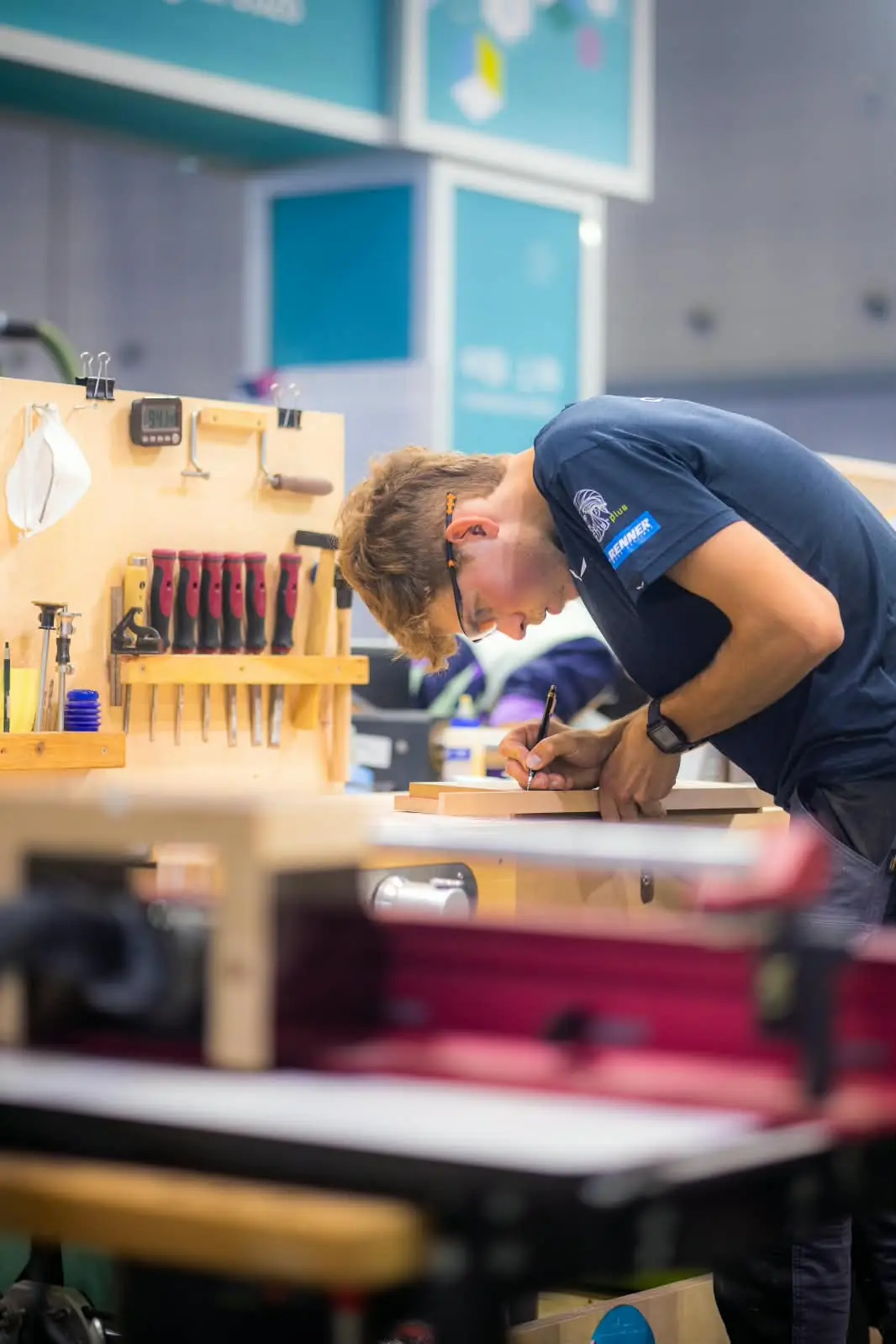
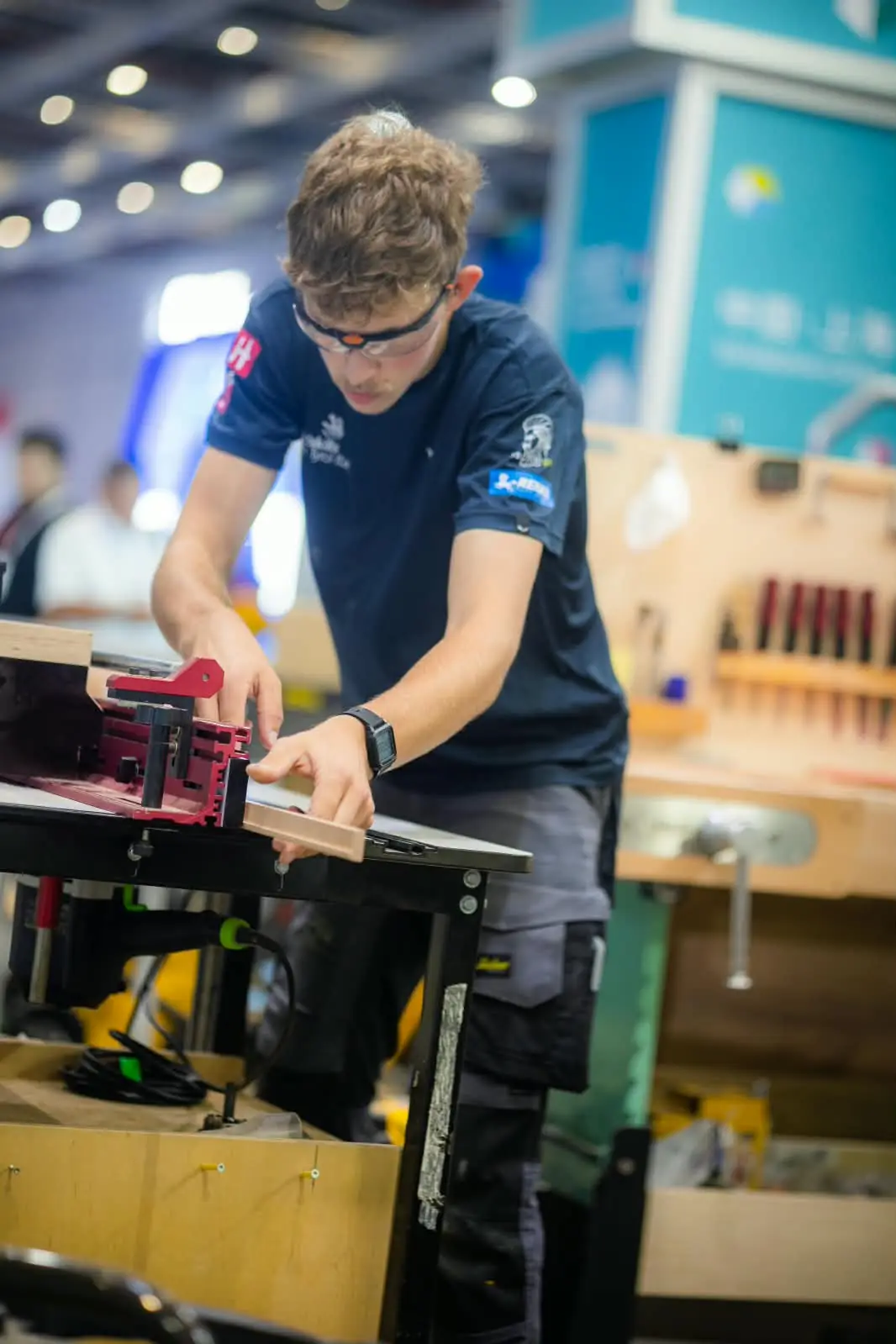
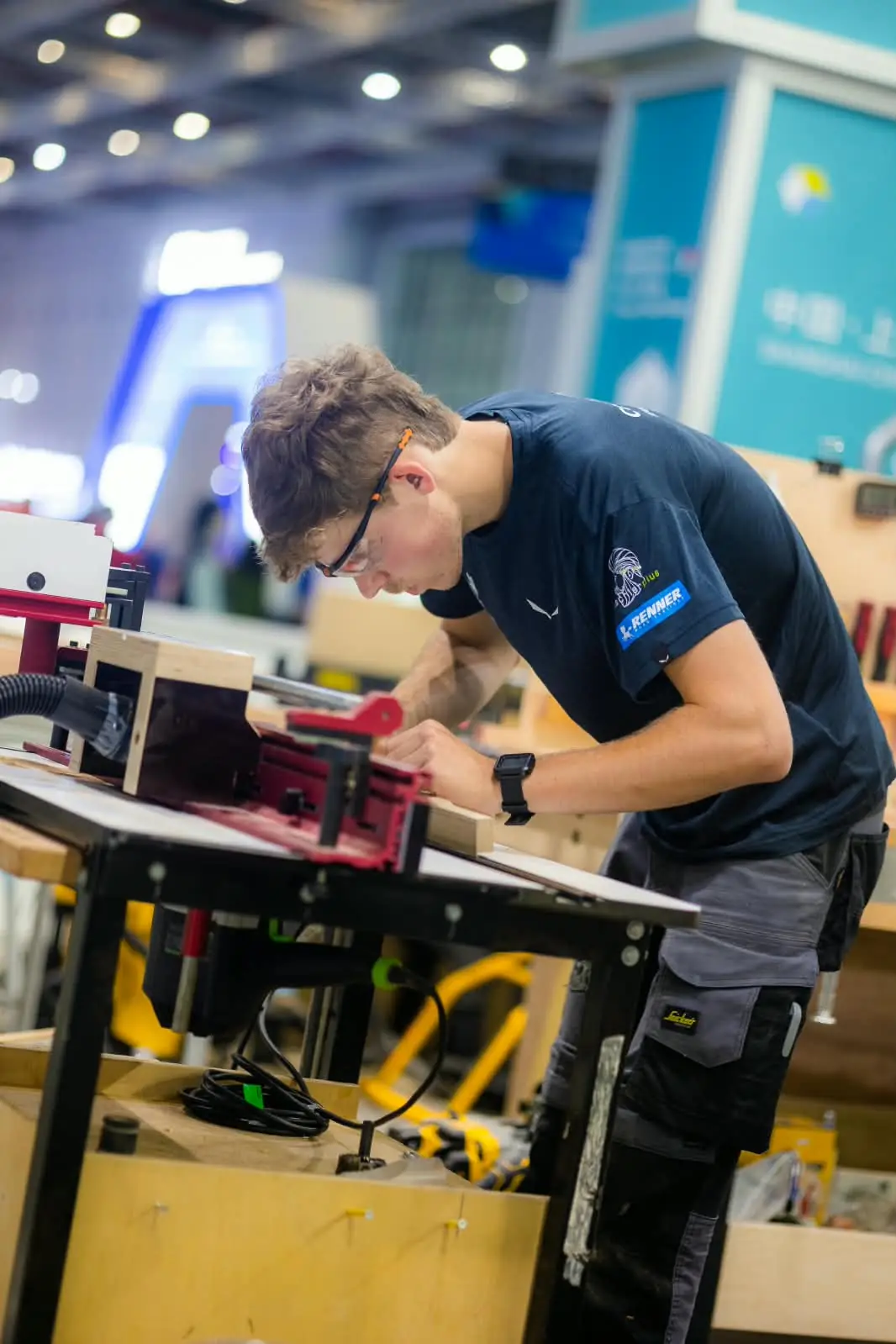
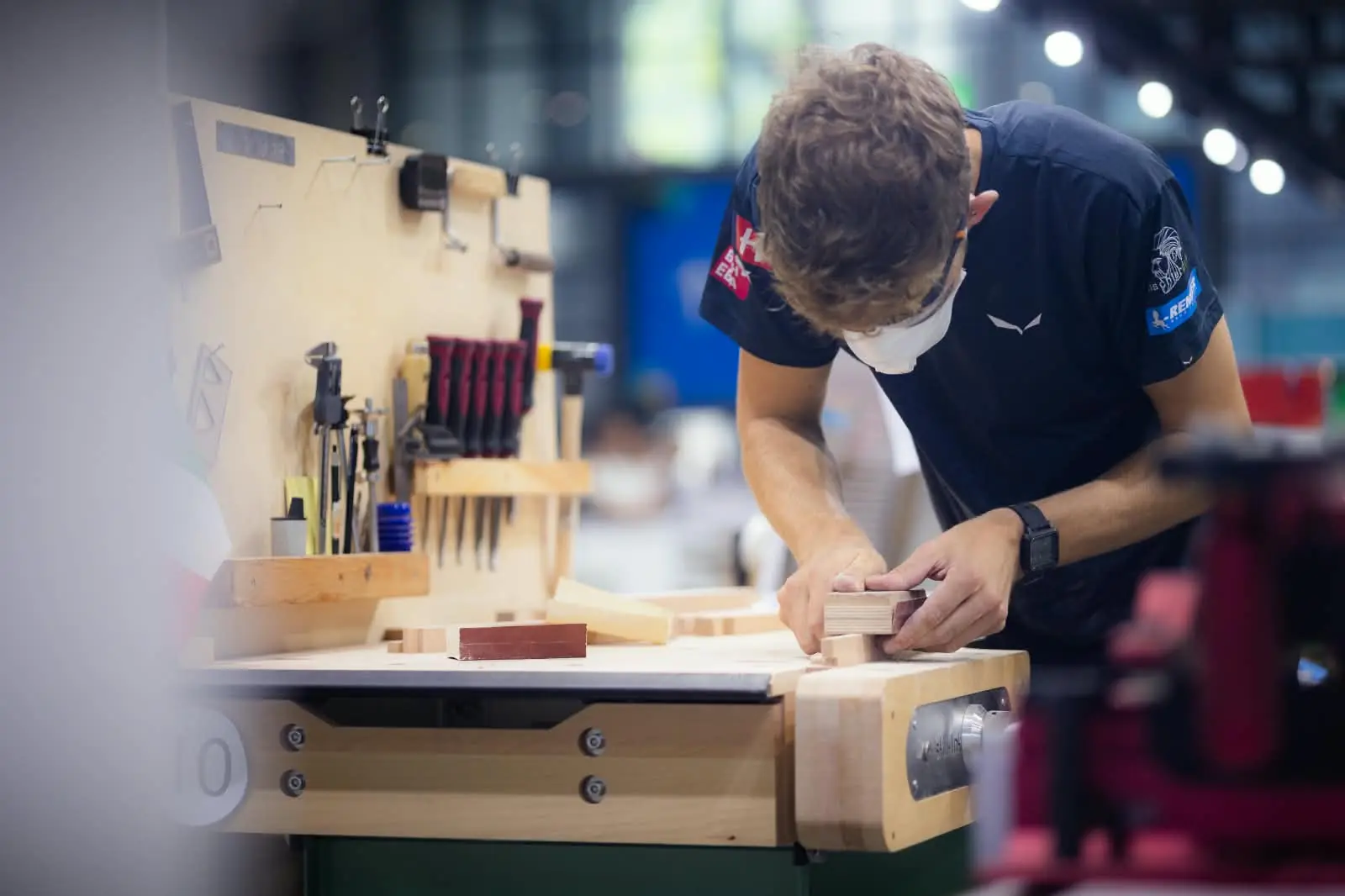
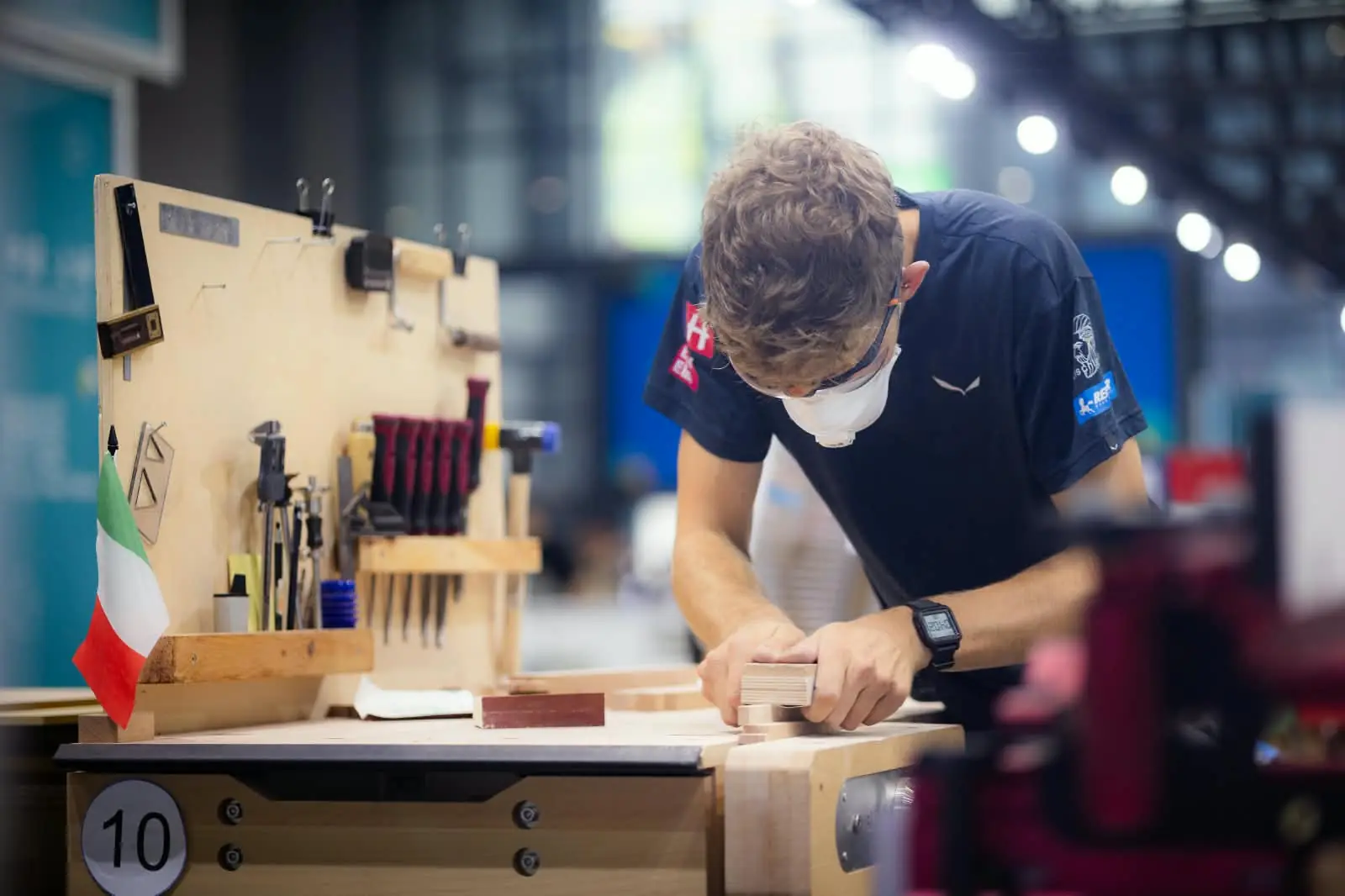
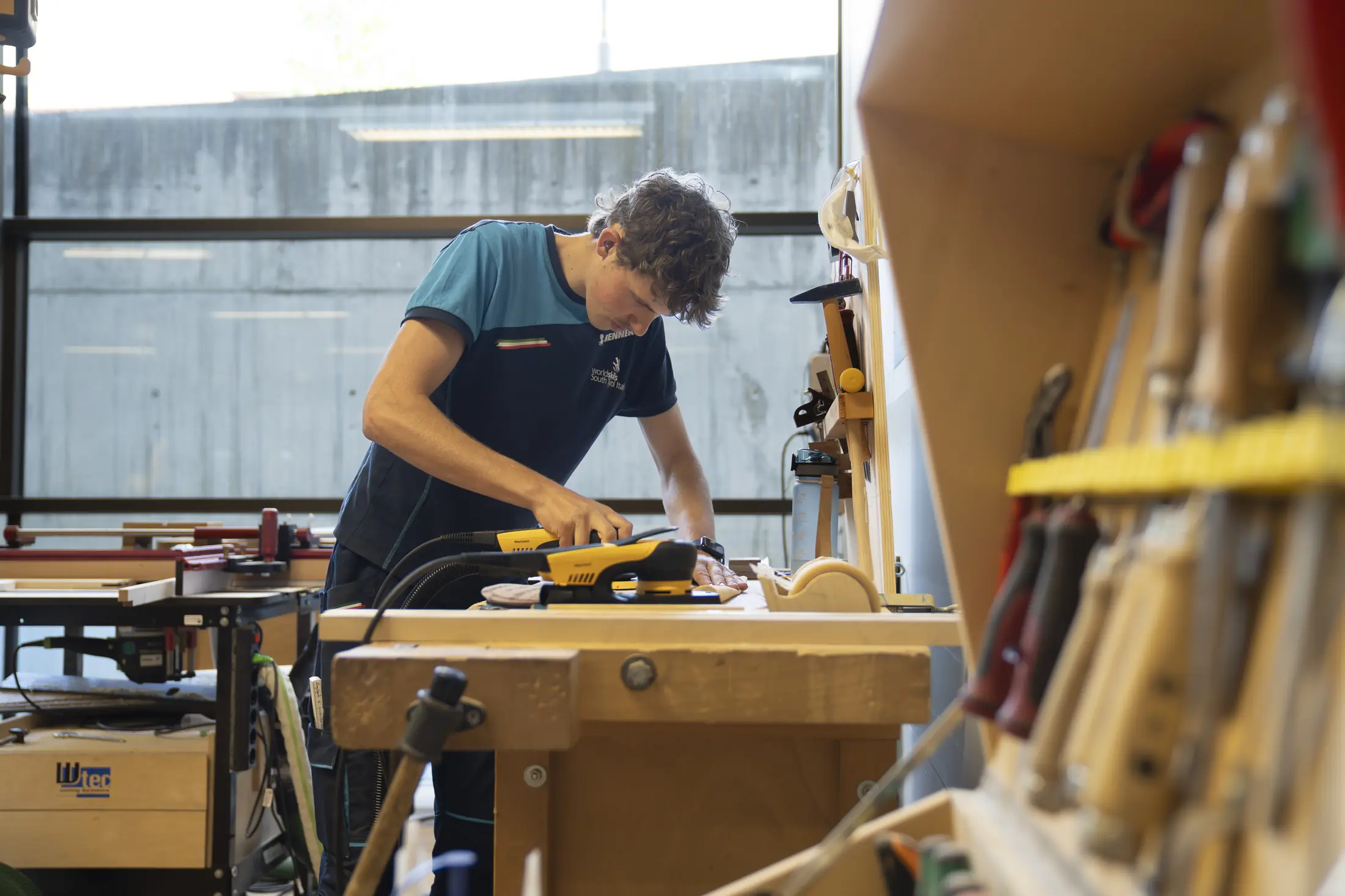
In the lab, just like in a final, there’s no room for “almost.” A cut can’t be “just” straight. A joint can’t be “almost” precise. A surface can’t be “more or less” finished. Wood records everything: mistakes, haste, and distractions. And that’s exactly why it rewards those who know how to listen to it.
For Renner Italia, which works side by side with carpenters, artisans, and the woodworking industry every day, this craft holds a special value. It embodies the most authentic essence of a well-made product: where materials, design, expertise, technology, and finish come together. It tells the story of an Italy that still knows how to create beauty, starting from a workbench.
The Team
South Tyrol as a representative of Italy
In Shanghai, the WorldSkills South Tyrol, Italy team showcased
the quality of South Tyrolean vocational training to the world.
The project represents South Tyrol in the WorldSkills competitions and is coordinated by the Bolzano Chamber of Commerce. Fifteen Italian craftspeople took part in the 2026 edition, ready to compete against the world’s best young professionals.
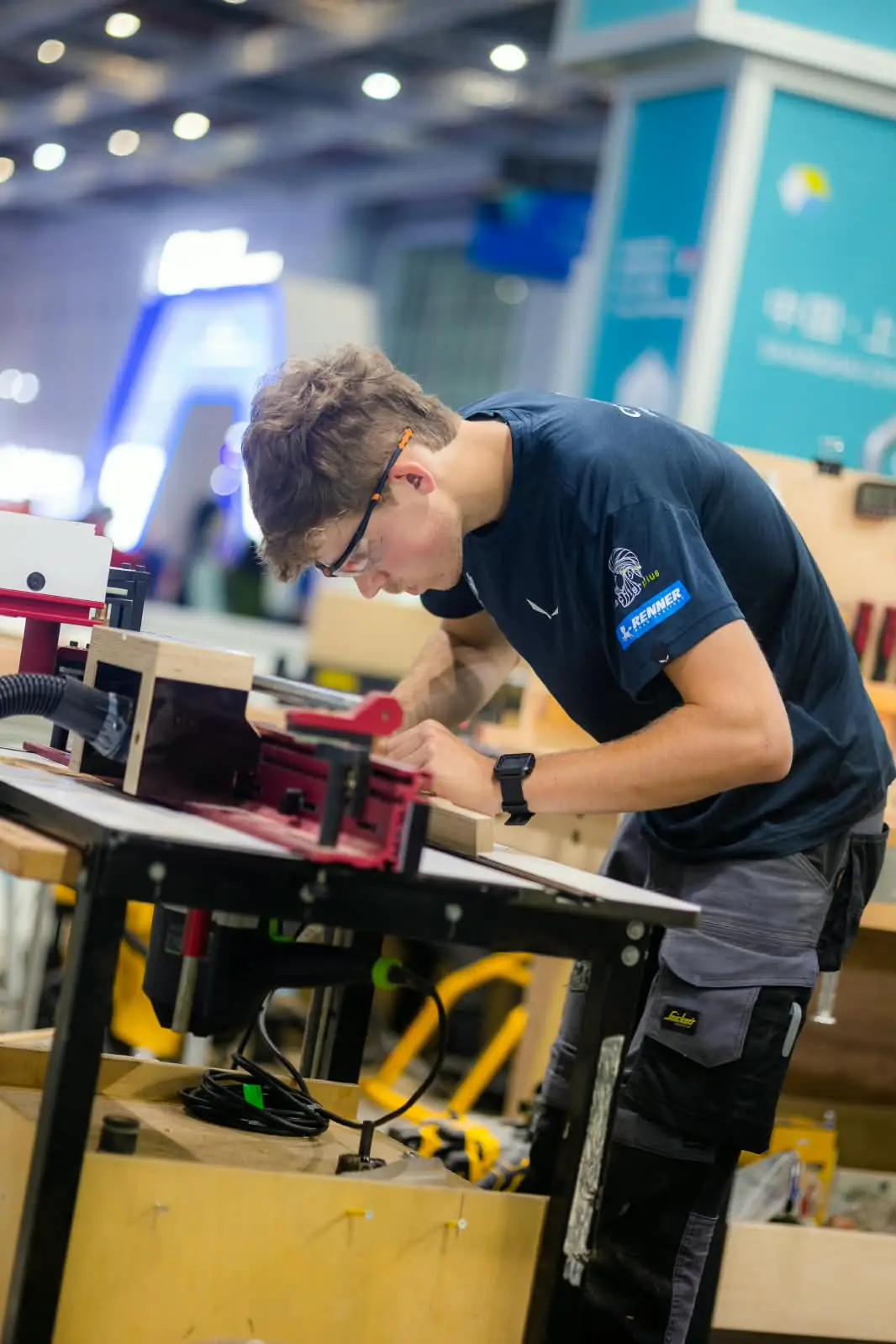
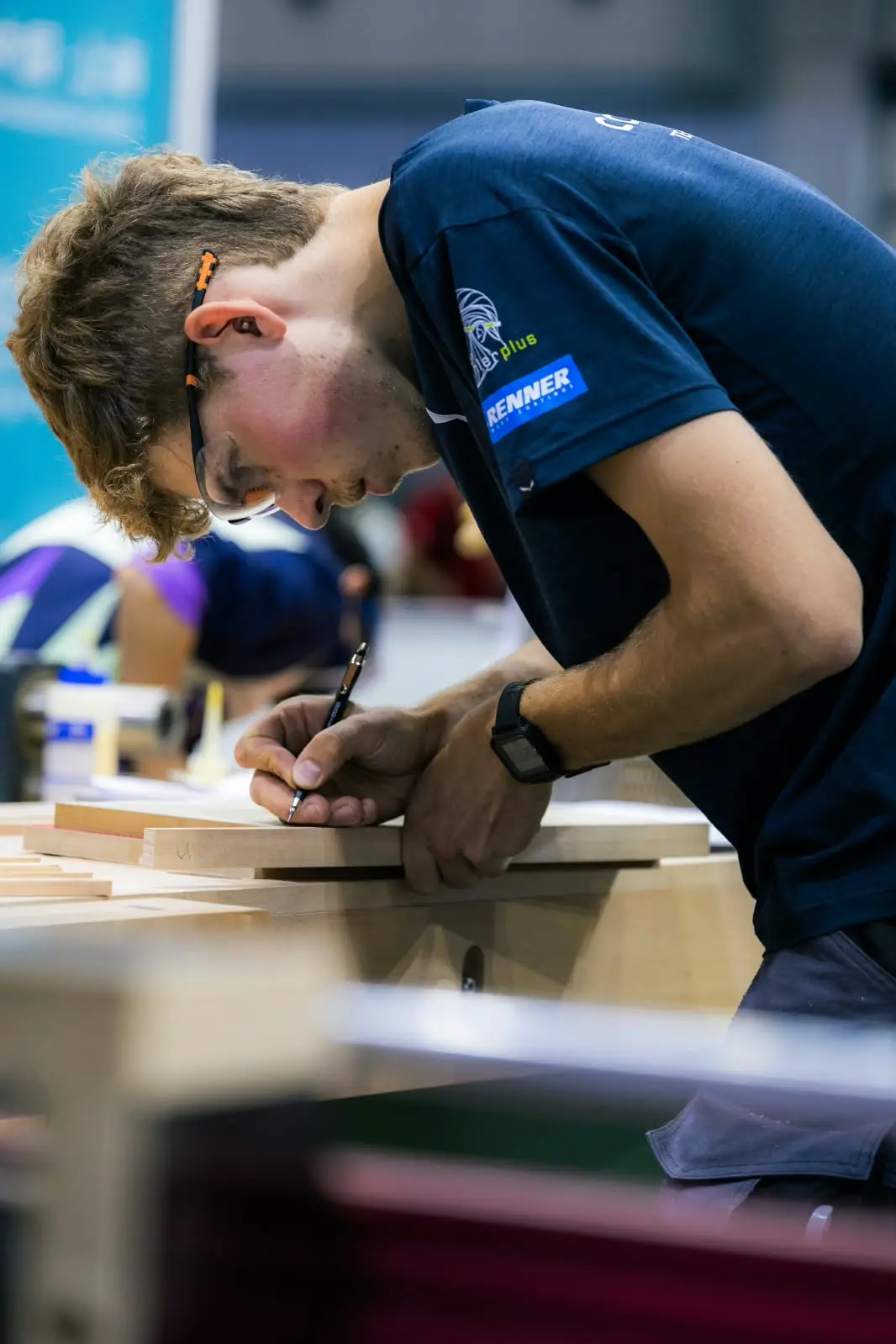
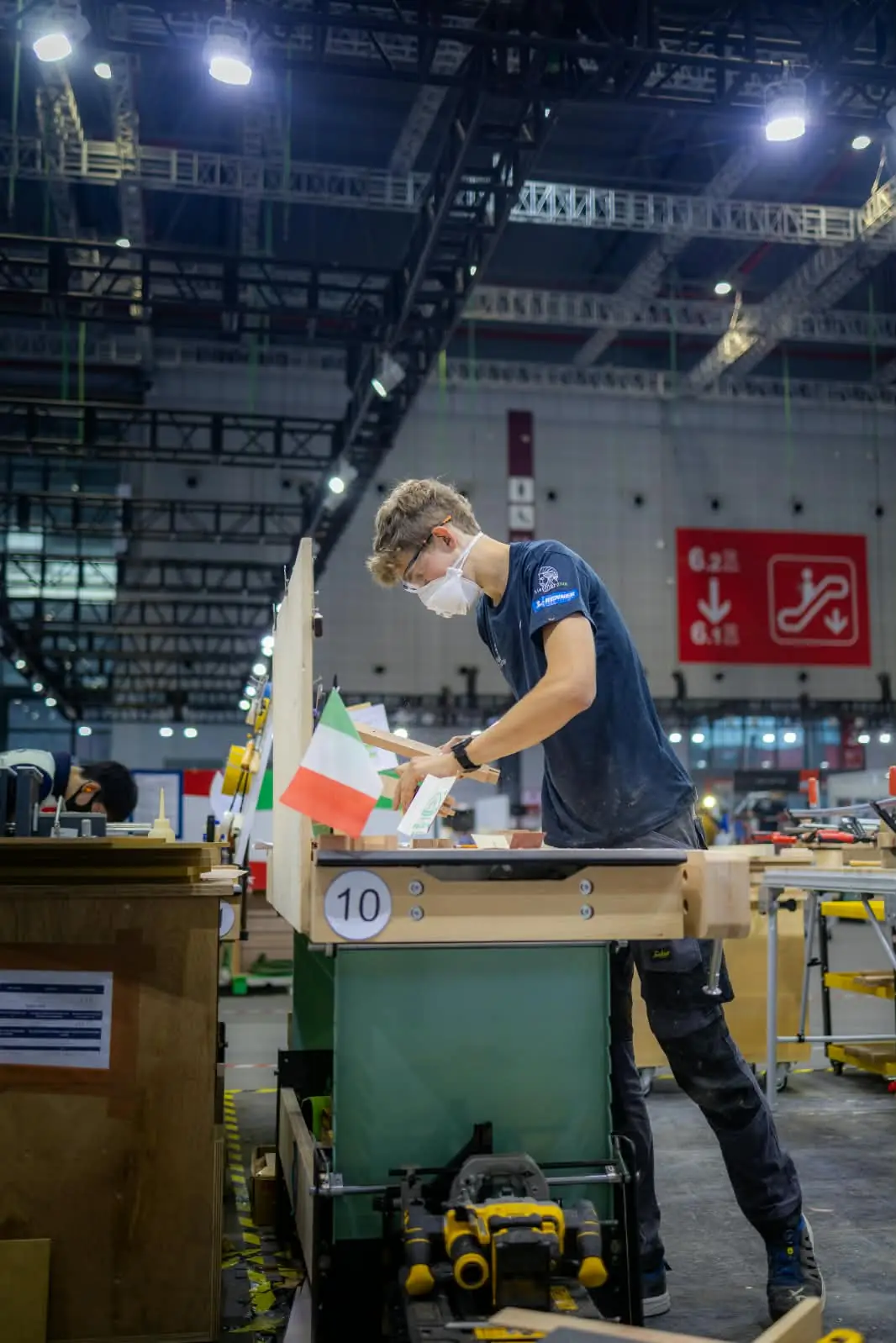
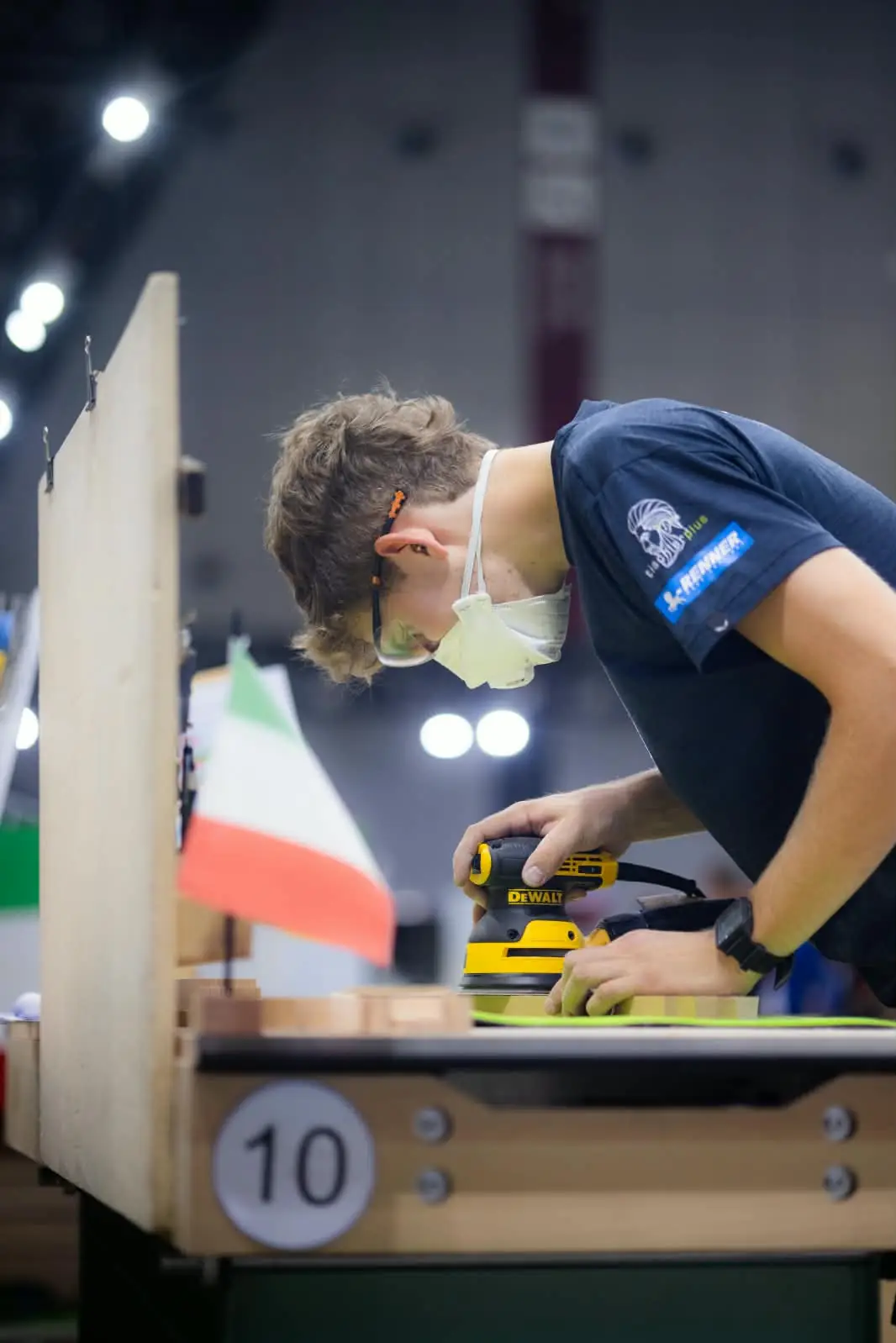
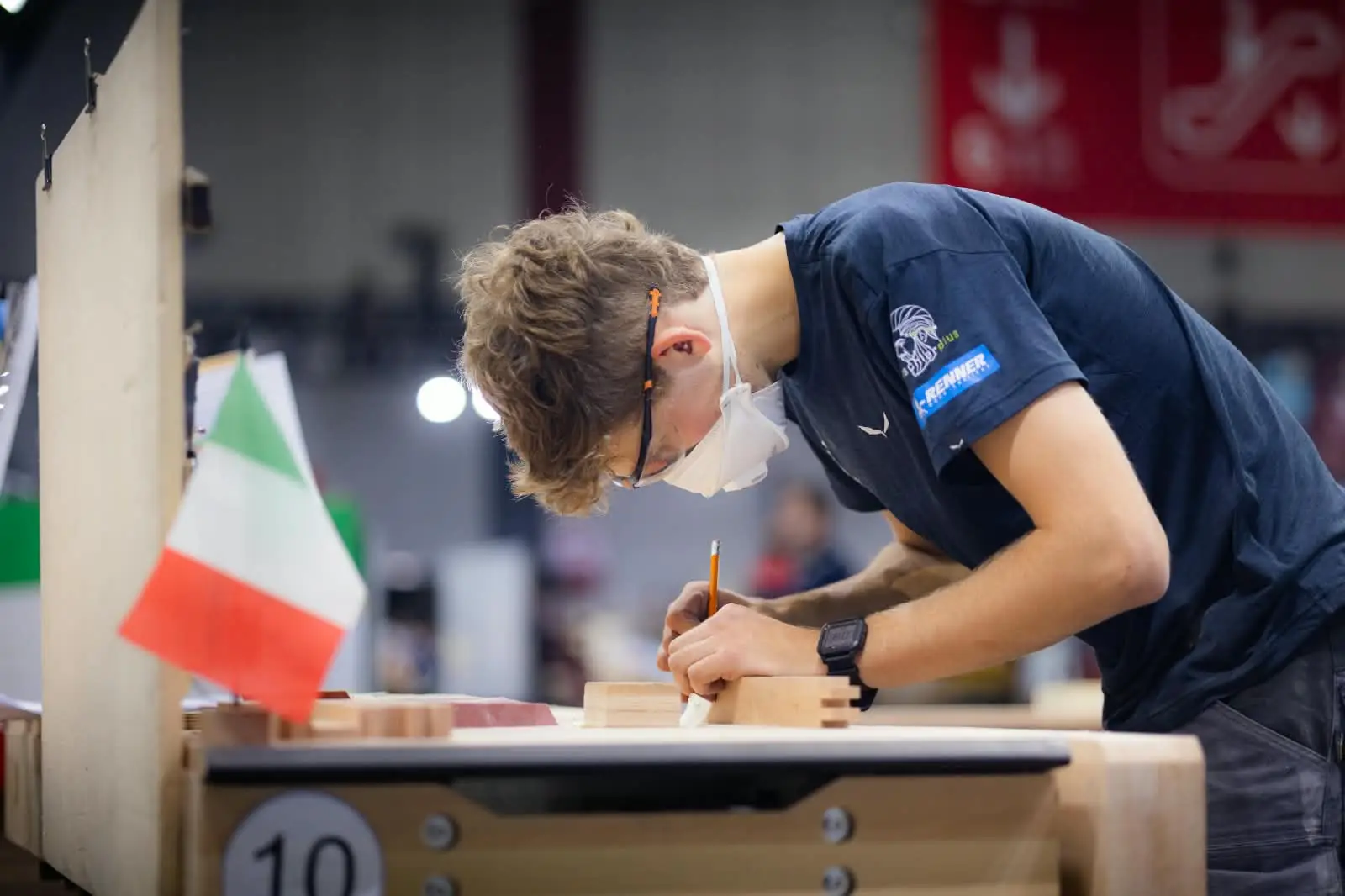
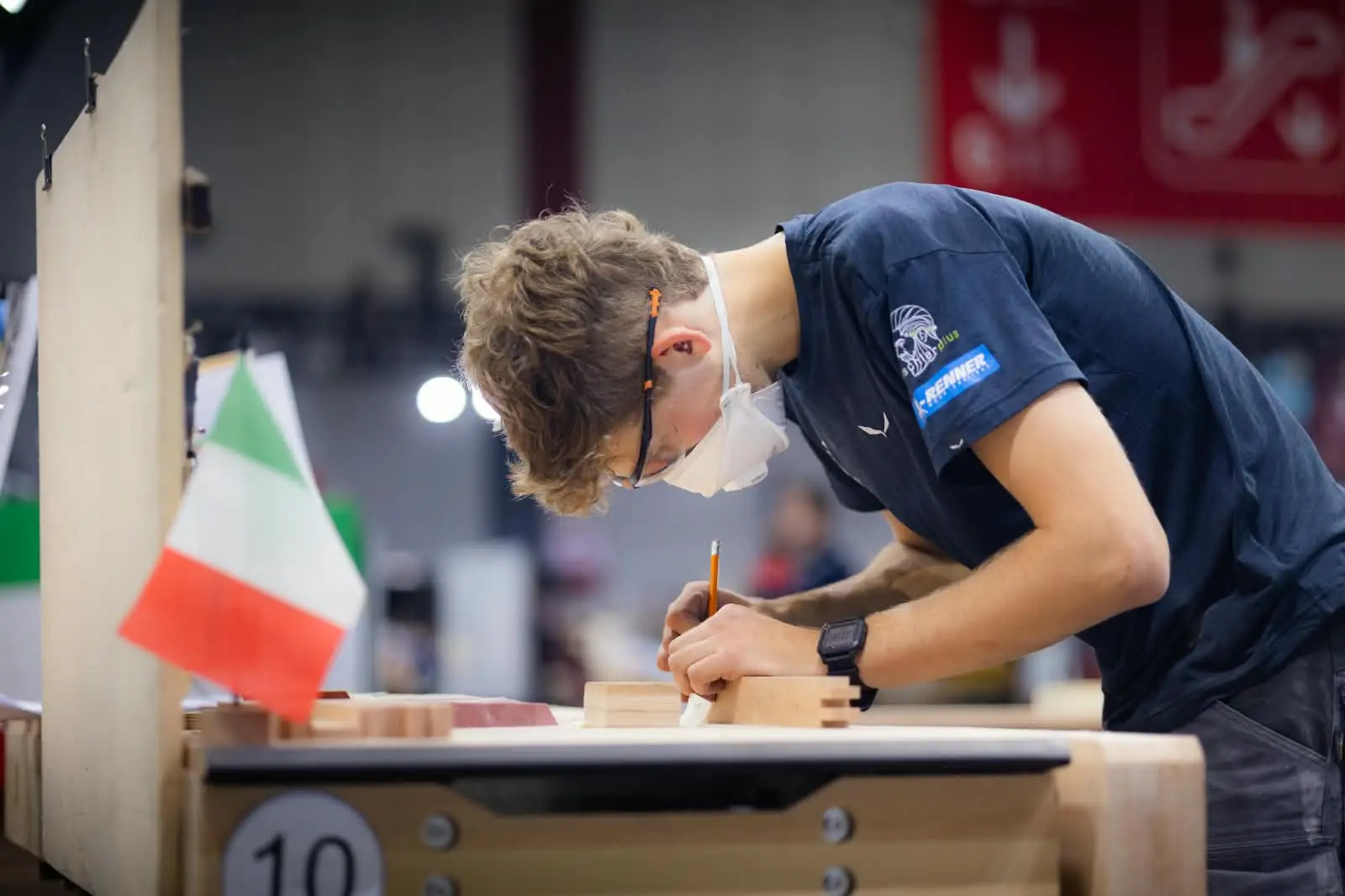
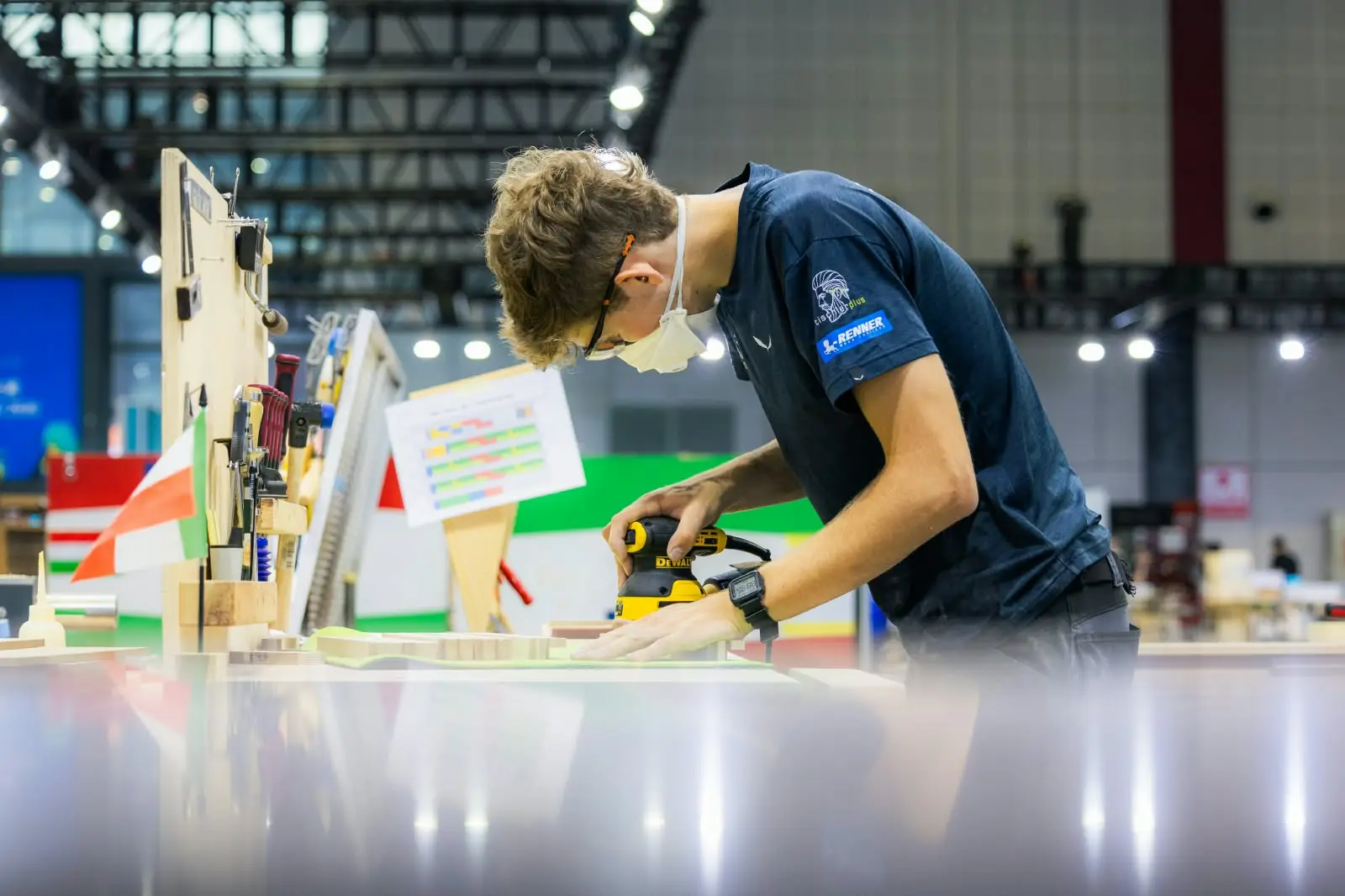
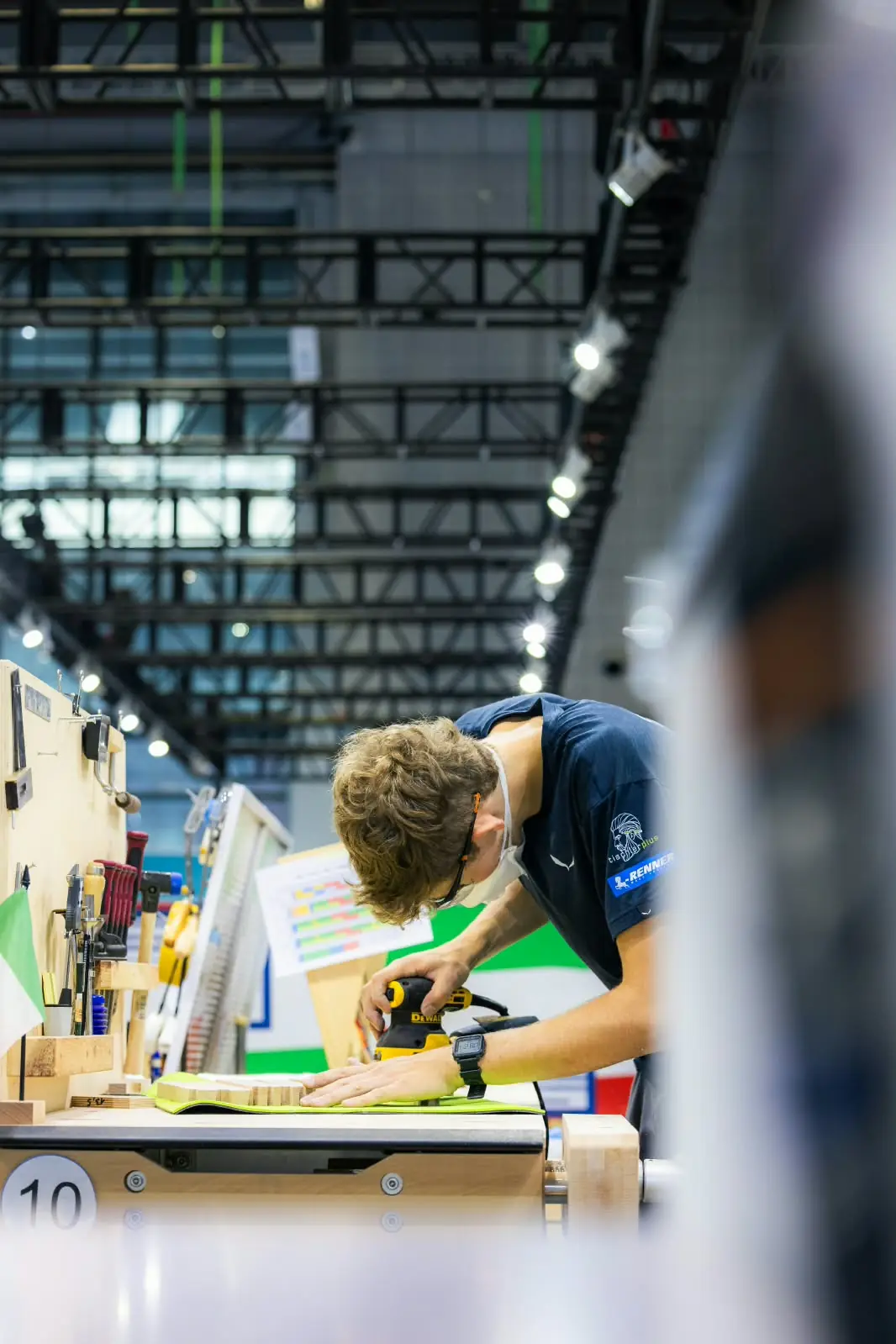
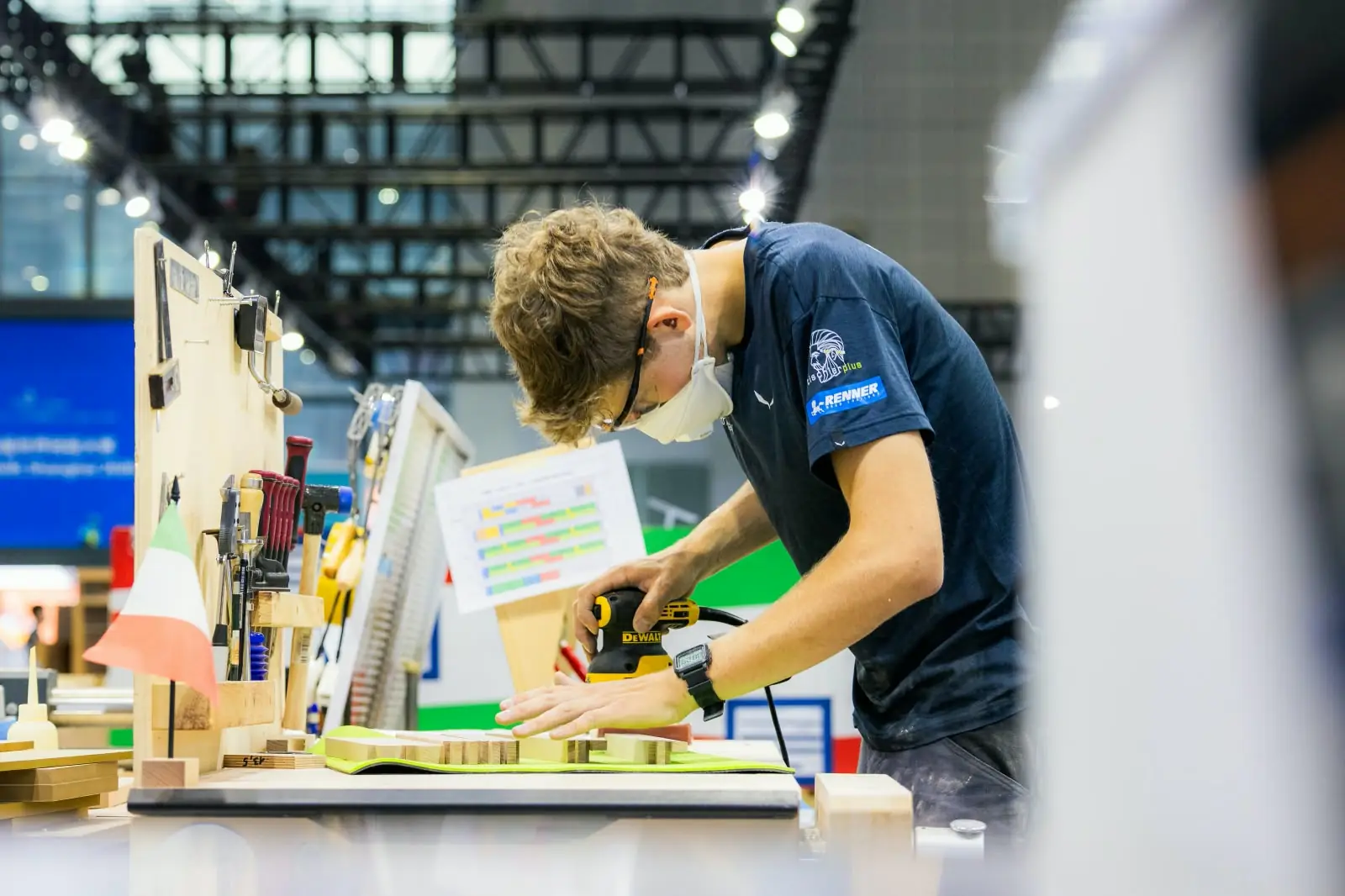
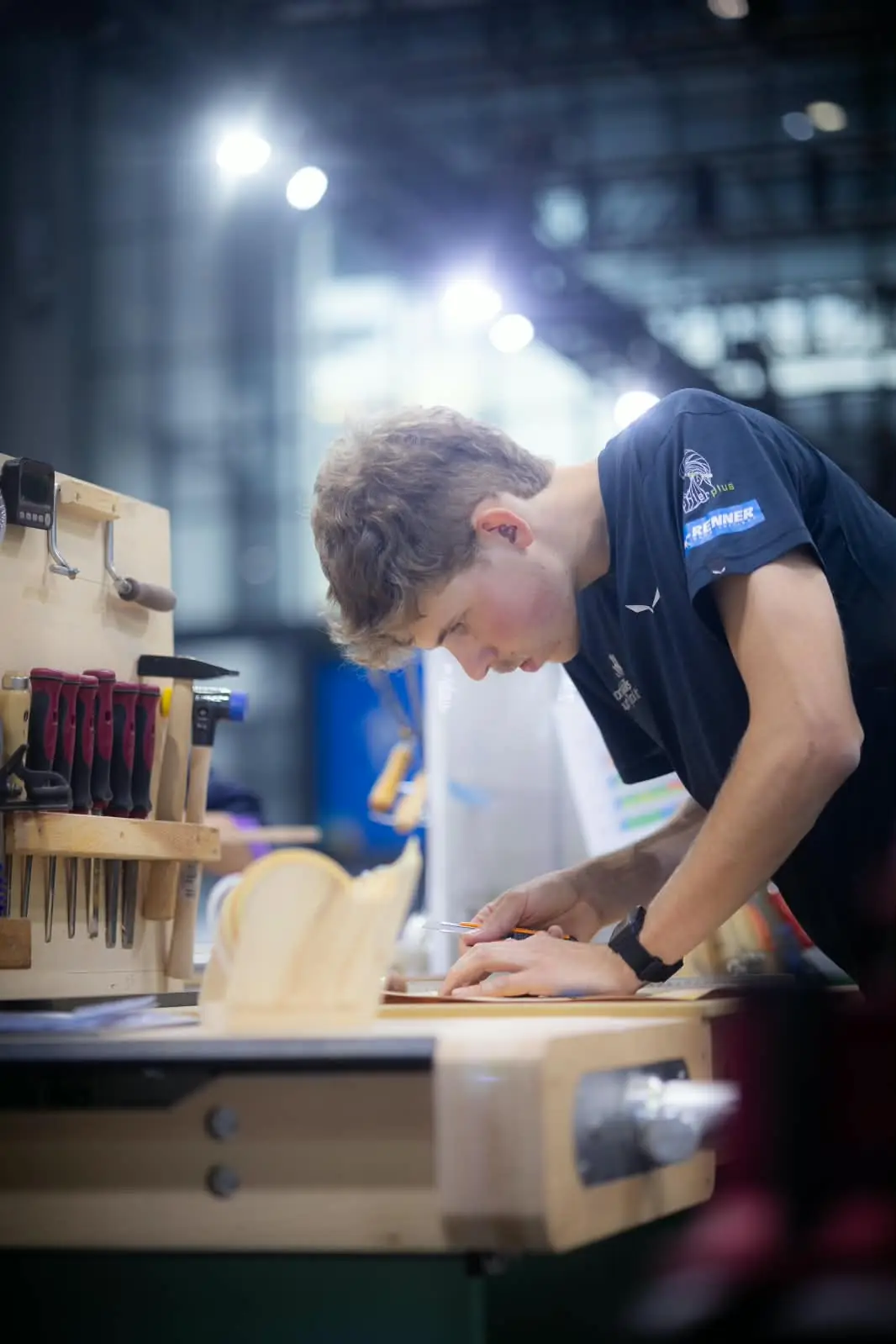
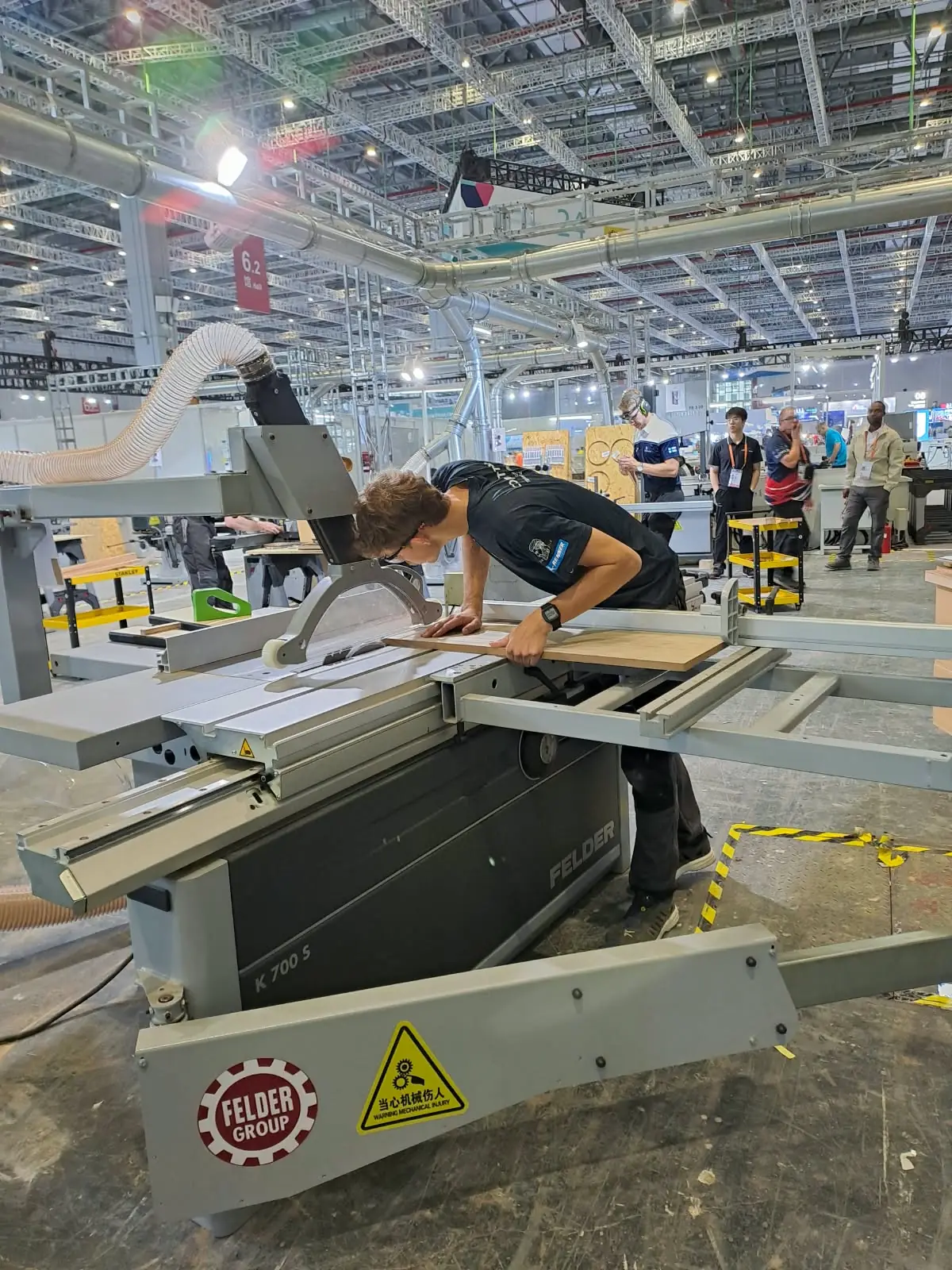
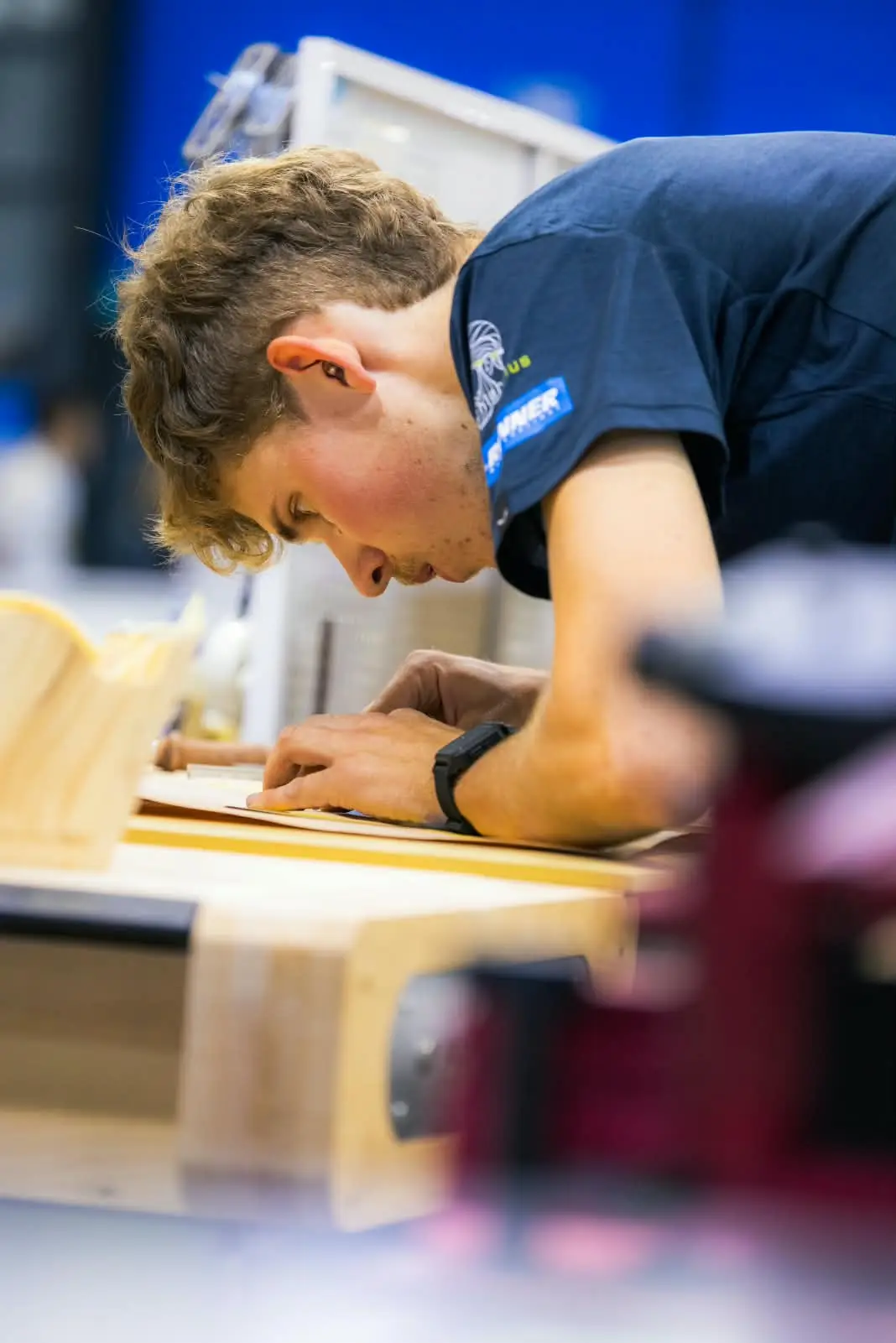
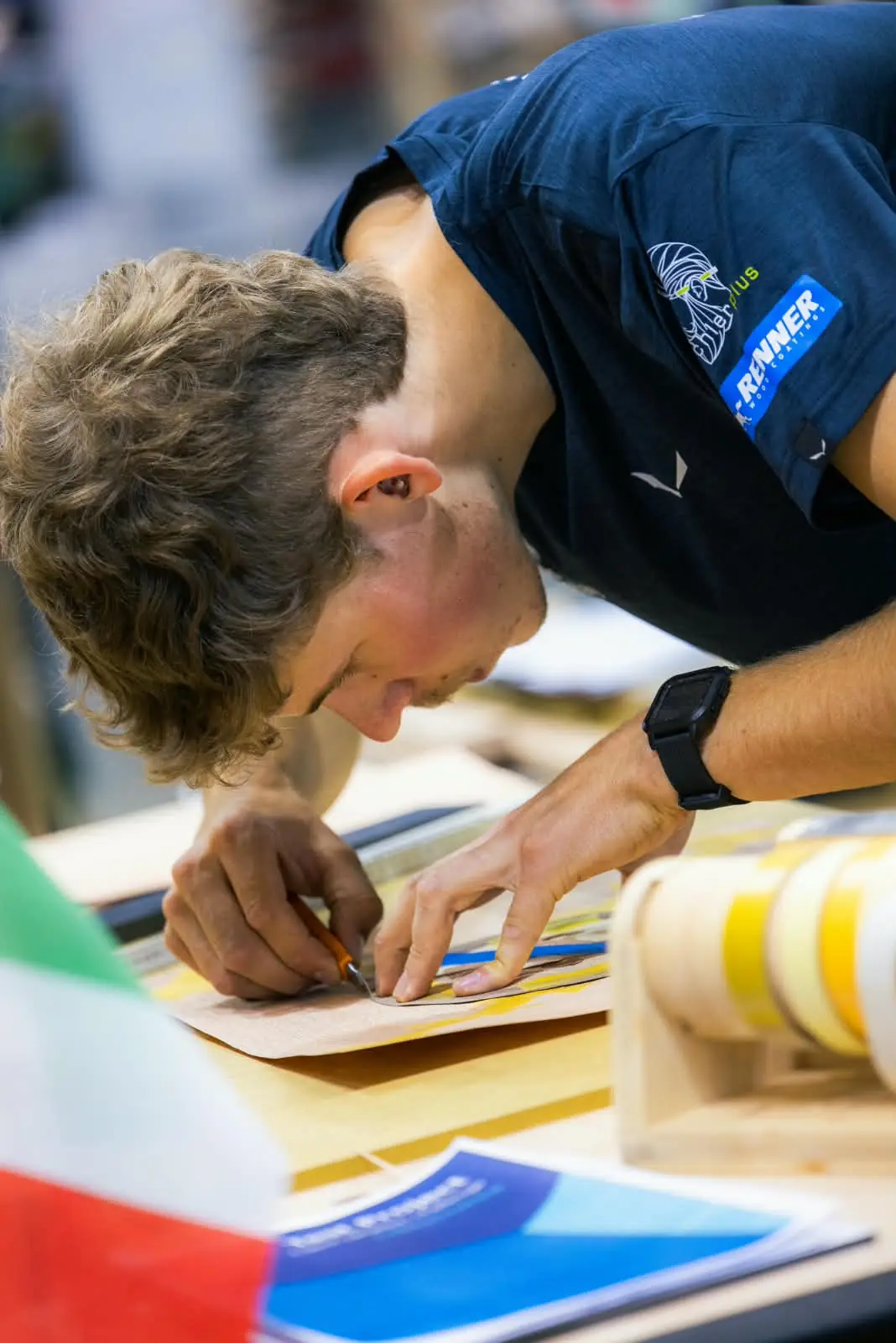
In the carpentry sector, Italy was represented by Jonas Wenter, born in 2005, from Collepietra in the Val d’Ega.
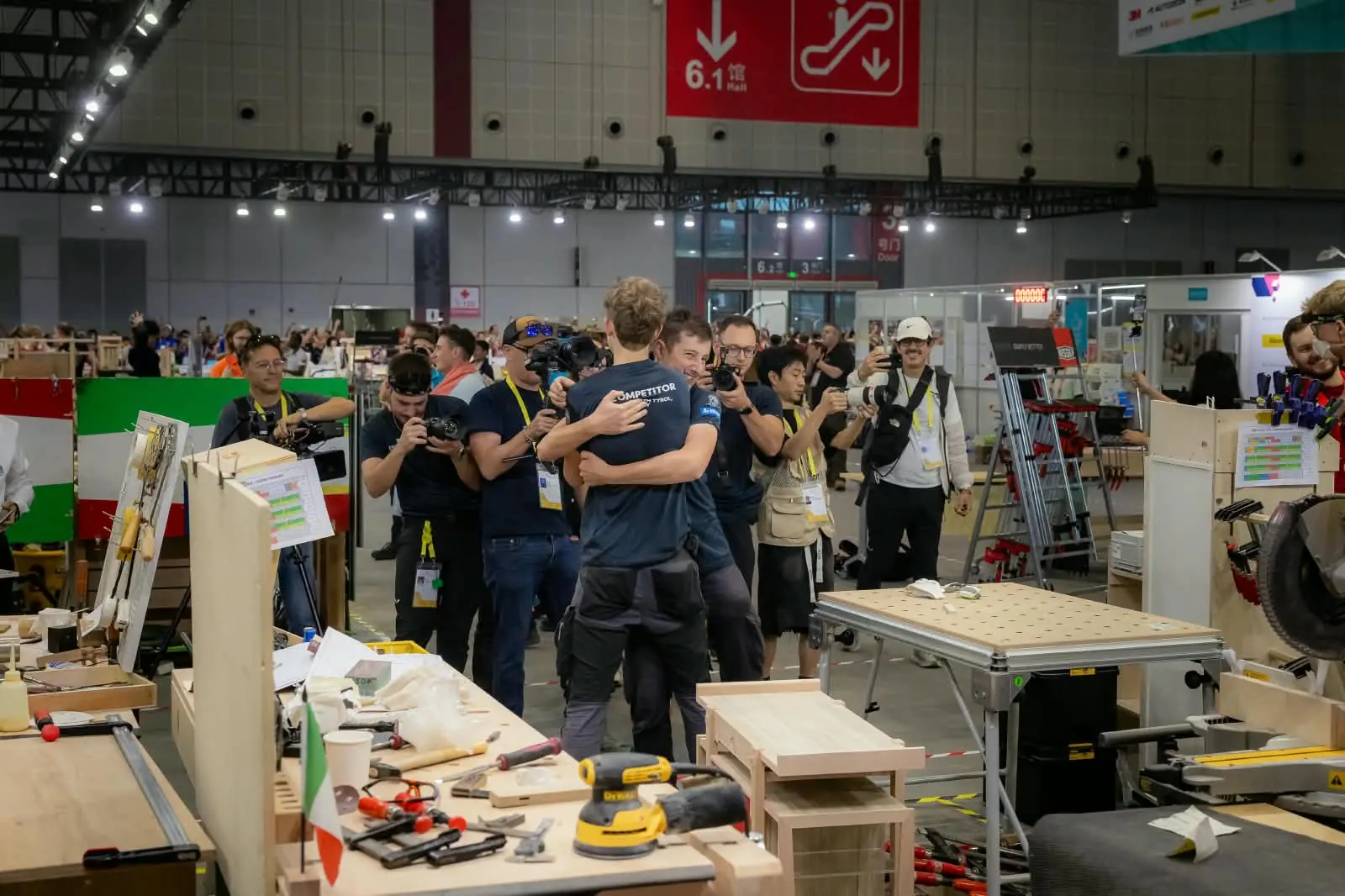
Jonas works at Matthias Resch’s Tischlerplus in Cornedo all’Isarco, and after winning first place at the Italian championships in 2025, he achieved another important milestone in his career in Shanghai: the bronze medal at the WorldSkills competition in the Cabinetmaking category.
By his side during his preparation was Jonas Prinoth, a young but already experienced coach.
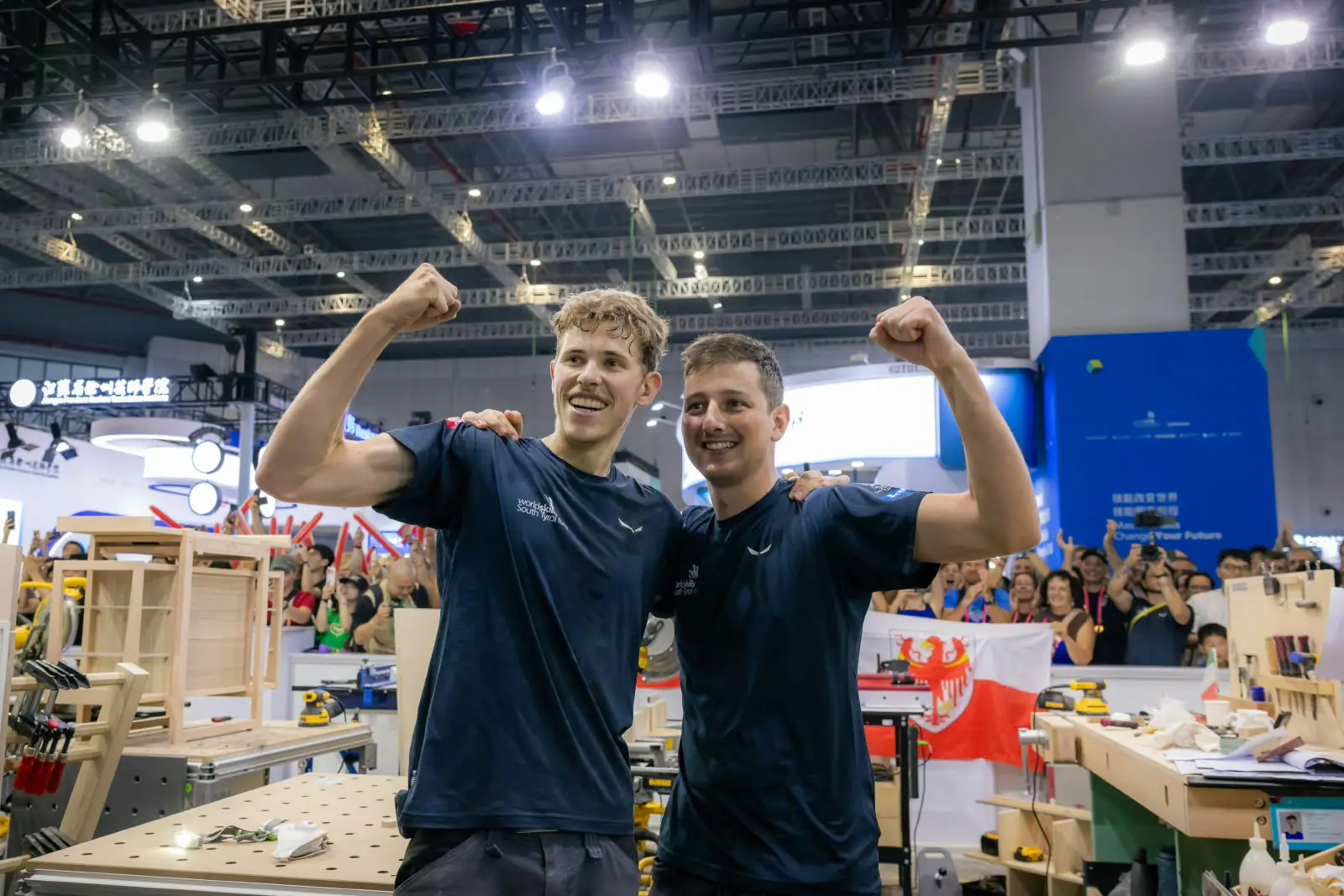
Two Jonas brothers. A workbench. A world championship podium.
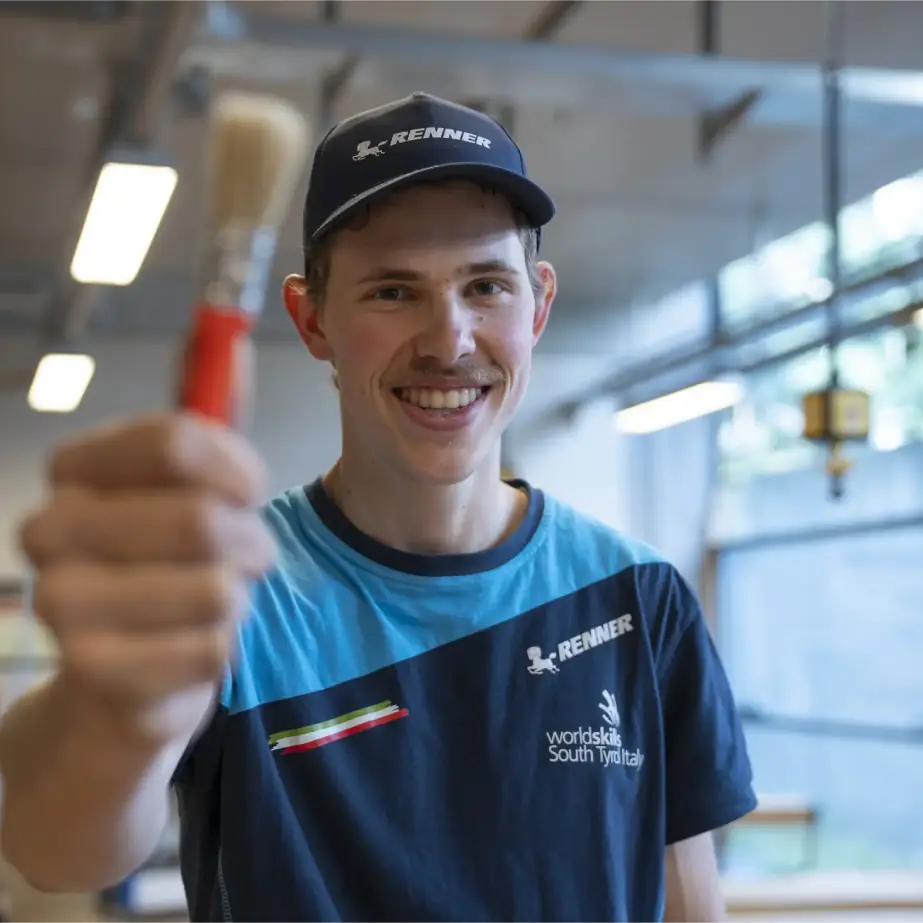
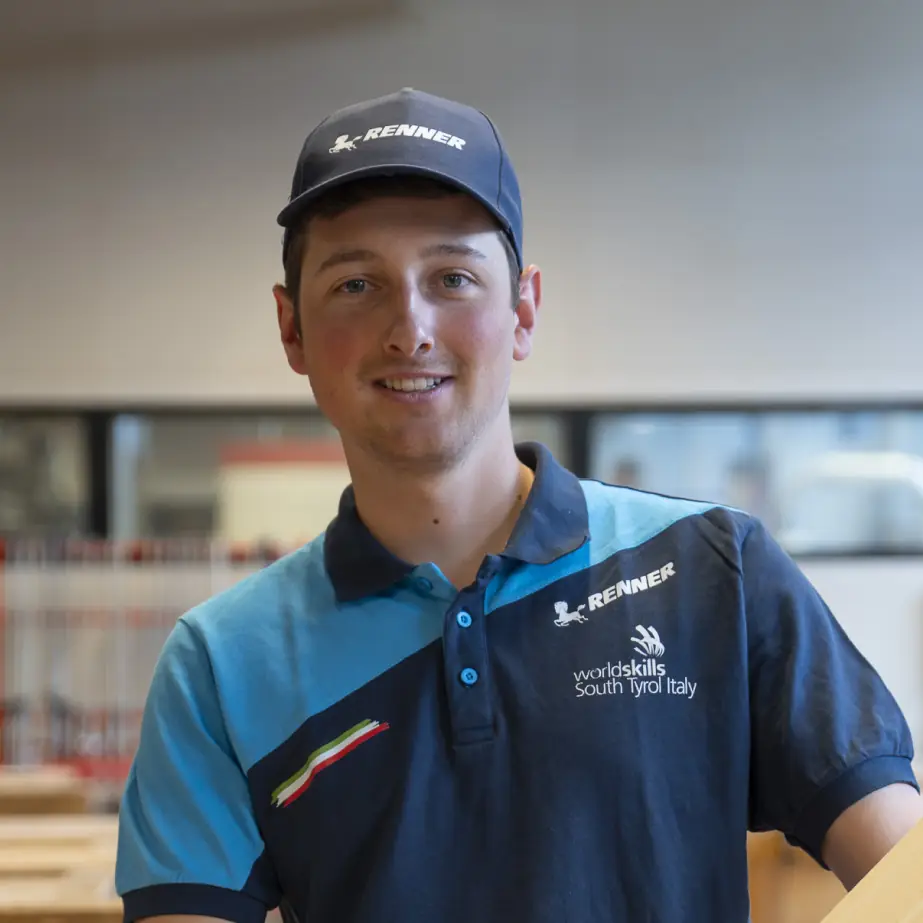
Jonas Wenter
the talent that brings Italian wood to the world
Jonas Wenter is twenty-one years old and talks about his craft with the down-to-earth attitude of someone who lives it every day. He doesn’t use fancy slogans. He doesn’t look for shortcuts. He talks about the wood, the tools, the hard work, and the focus. He talks about a calling that emerged early on.
In an interview conducted by Renner Italia during training, Jonas recalls the moment it all began: as a boy, watching his uncle Raimond build furniture. That’s when he made the decision: to become a woodworker. And then there was a simple, almost symbolic gesture: a plane he received as a gift. A tool, even before it was an object. The first passing of the torch.
«When I was 12, I watched my uncle Raimond make furniture. After that, I decided: I want to become a woodworker. ».
It’s a brief memory, to be sure. But within it lies a piece of Italian history: the story of trades passed down through the eyes, rather than through textbooks. We learn by watching. We learn by trying. We learn by making mistakes and correcting them. We learn because someone, before us, showed us that a plank of wood can become a piece of furniture, that a tool can become a language, that a profession can become an identity.
Jonas says it matter-of-factly: “I have two passions in life: the first is woodworking, the second is mountain biking.” This is the profile of a young contemporary artisan: deeply rooted in his community, accustomed to discipline, and able to bring the same mental resilience to his workshop that he needs when climbing hills.
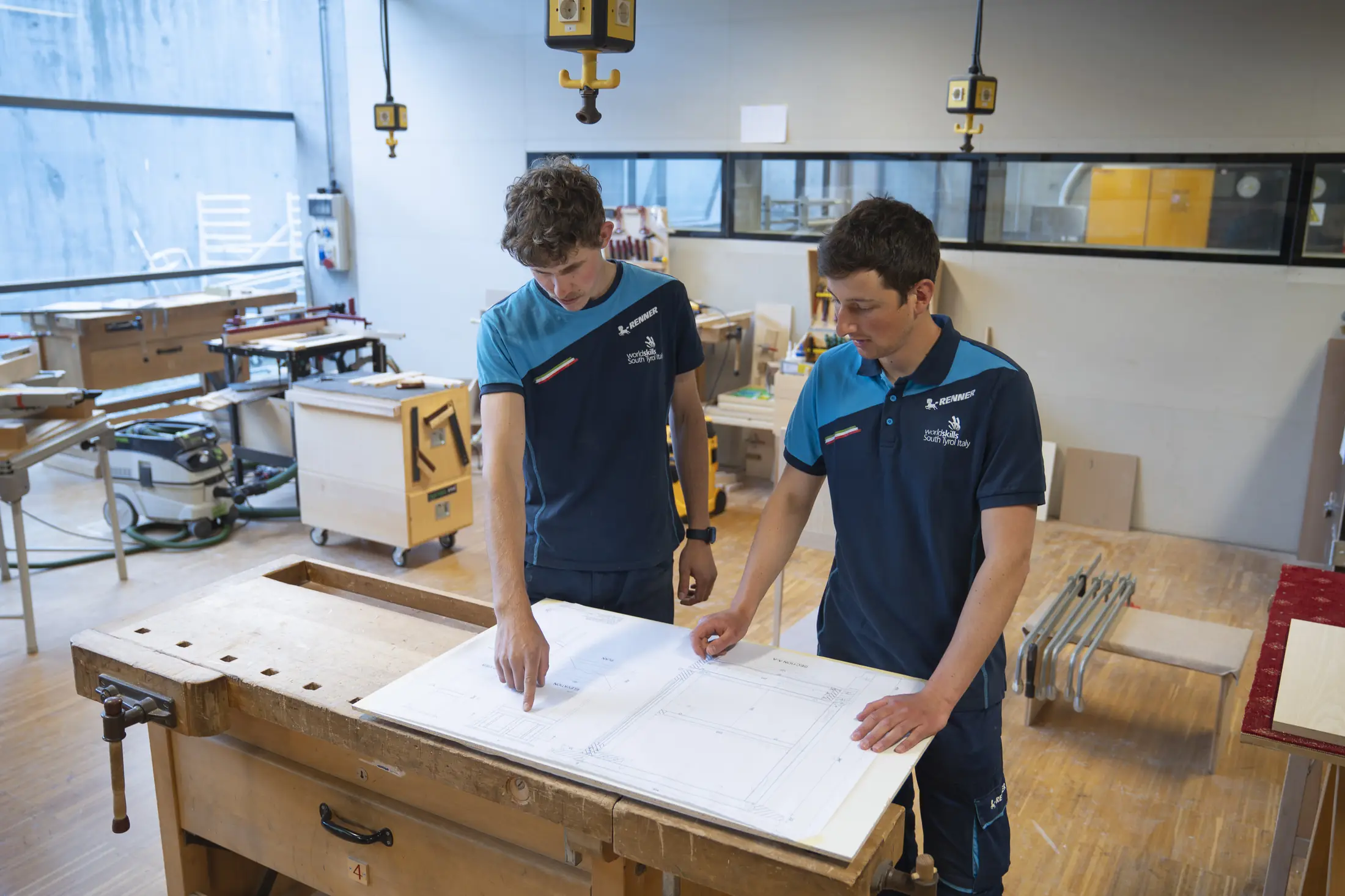
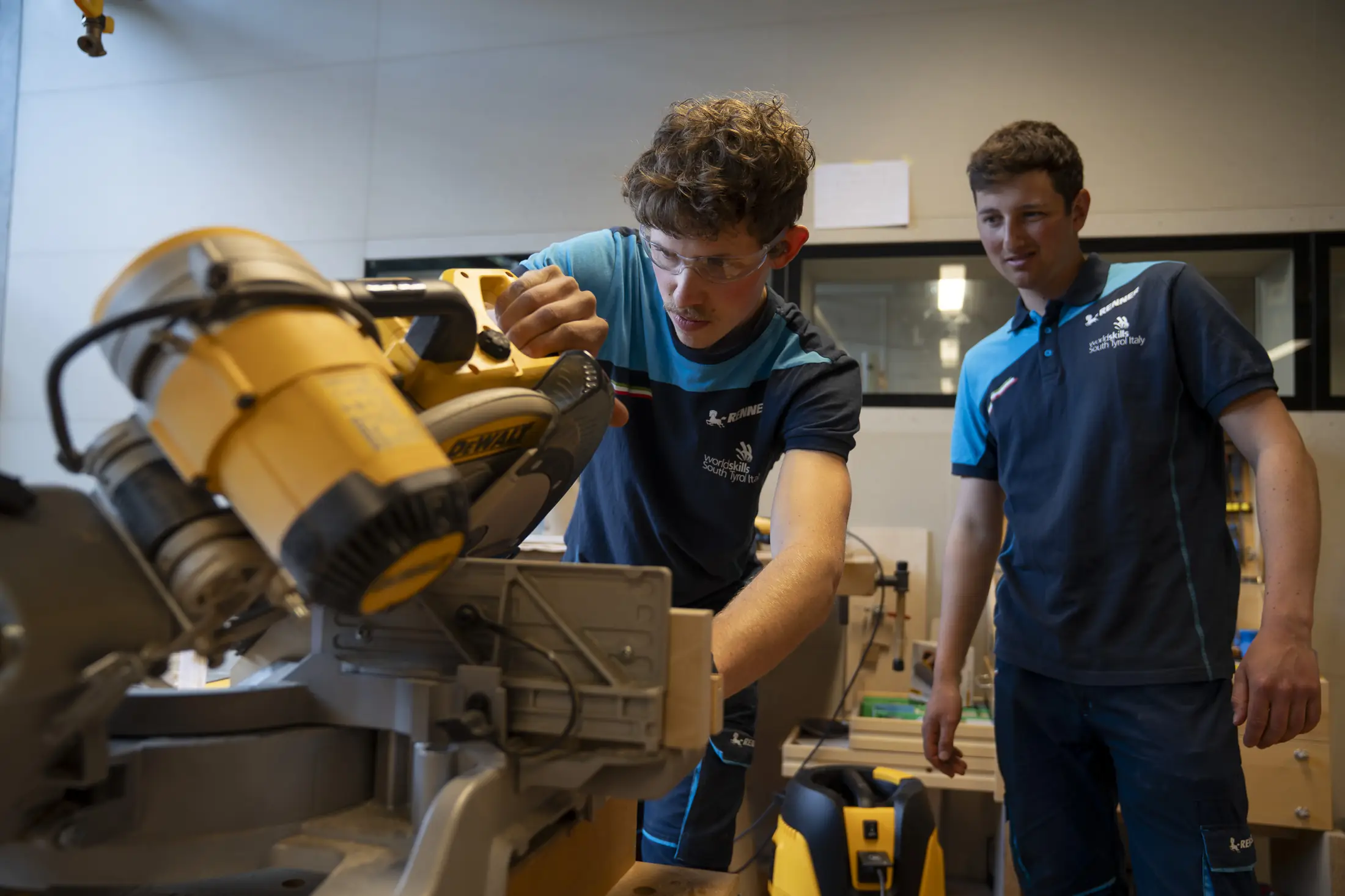
Standing alongside Jonas Wenter is Jonas Prinoth, aged twenty-five, coach of the Carpenters’ Team. He, too, comes from a carpentry background. He, too, started out as a child, in his father’s workshop. Today, his role is to transform talent into method, passion into preparation, and precision into second nature.
Training sessions take place in Bolzano, at the Landesberufsschule für Handwerk und Industrie, a school that provides the space and equipment needed to simulate competition conditions. A key point emerges from Jonas Prinoth’s account: to make it to Shanghai, it is not enough simply to know how to work well. You have to learn to work well under pressure.
‘We’re training here in Bolzano, at a centre of excellence,’ he explains. We went to visit them. There, the pair work on everything that can make a difference: details, joints, dovetails, mortises and tenons, inlays, and the construction of complete pieces of furniture.
The programme is intense. Training began in January and takes place three times a week. They start with the technical details, then ramp up the intensity. Just like in athletic training, first you perfect the movement, then you put it to the test in competition. First the joint. Then the piece of furniture. First the check. Then the stopwatch.
Jonas Prinoth describes Wenter as follows: ‘He won WorldSkills Italy. He’s very precise and focused on his work.’ He then adds an assessment that sounds like a sporting prediction: ‘I think he has a chance of winning in Shanghai.’
And those expectations were not disappointed.
Jonas Prinoth
the coach who plans every detail of the game
Behind the scenes of the training:
sketches, fittings, rehearsals
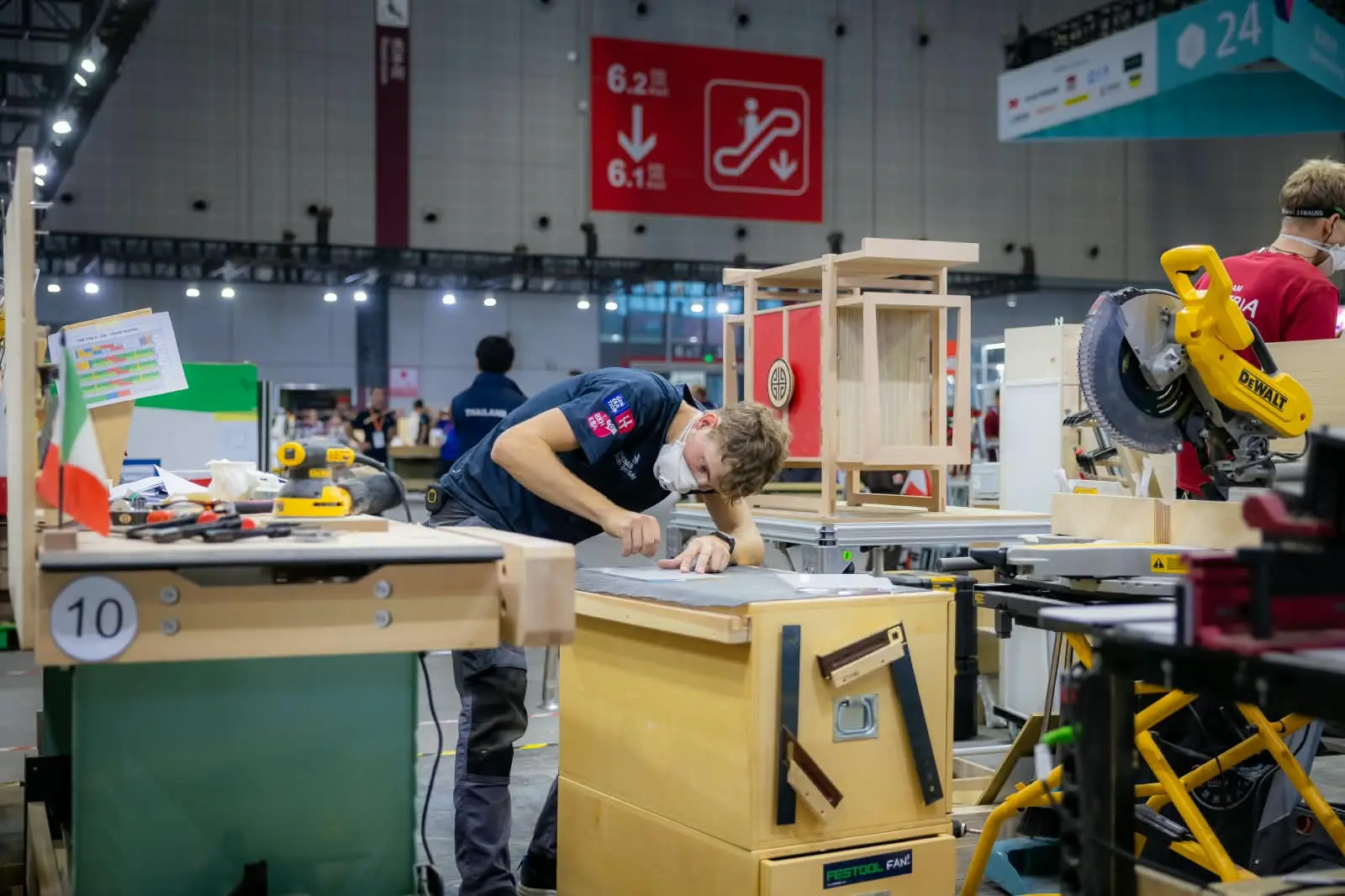
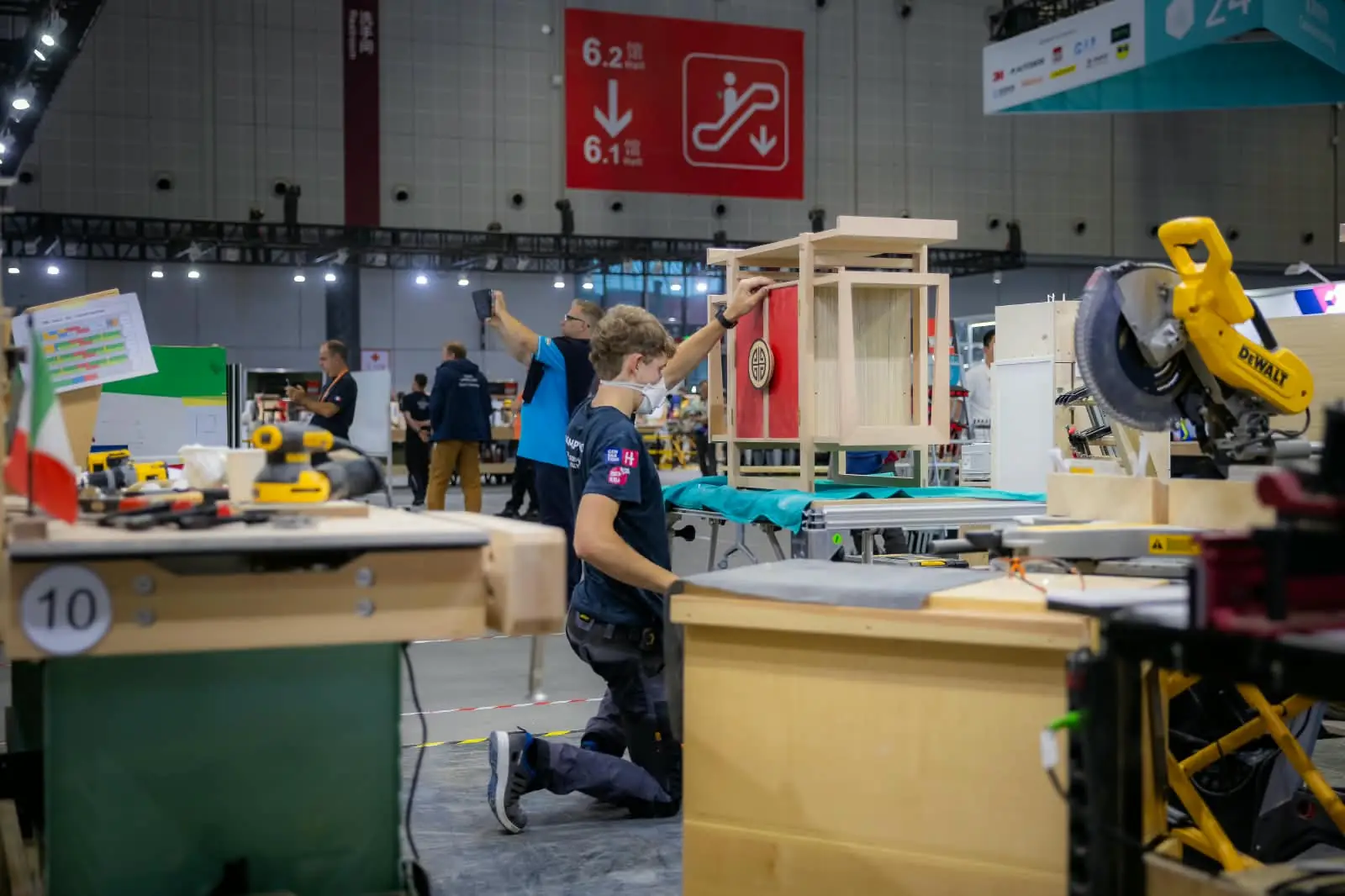
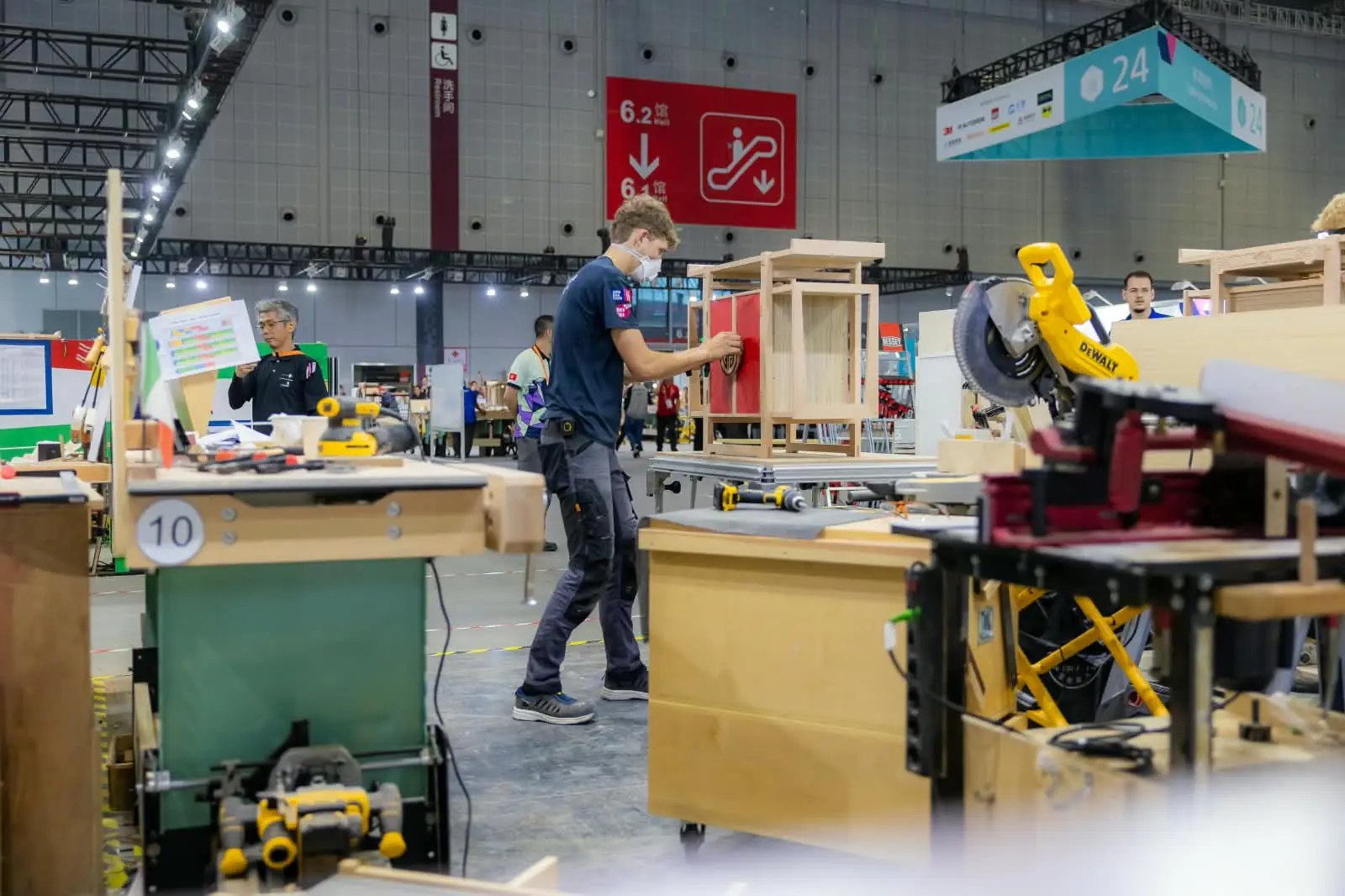
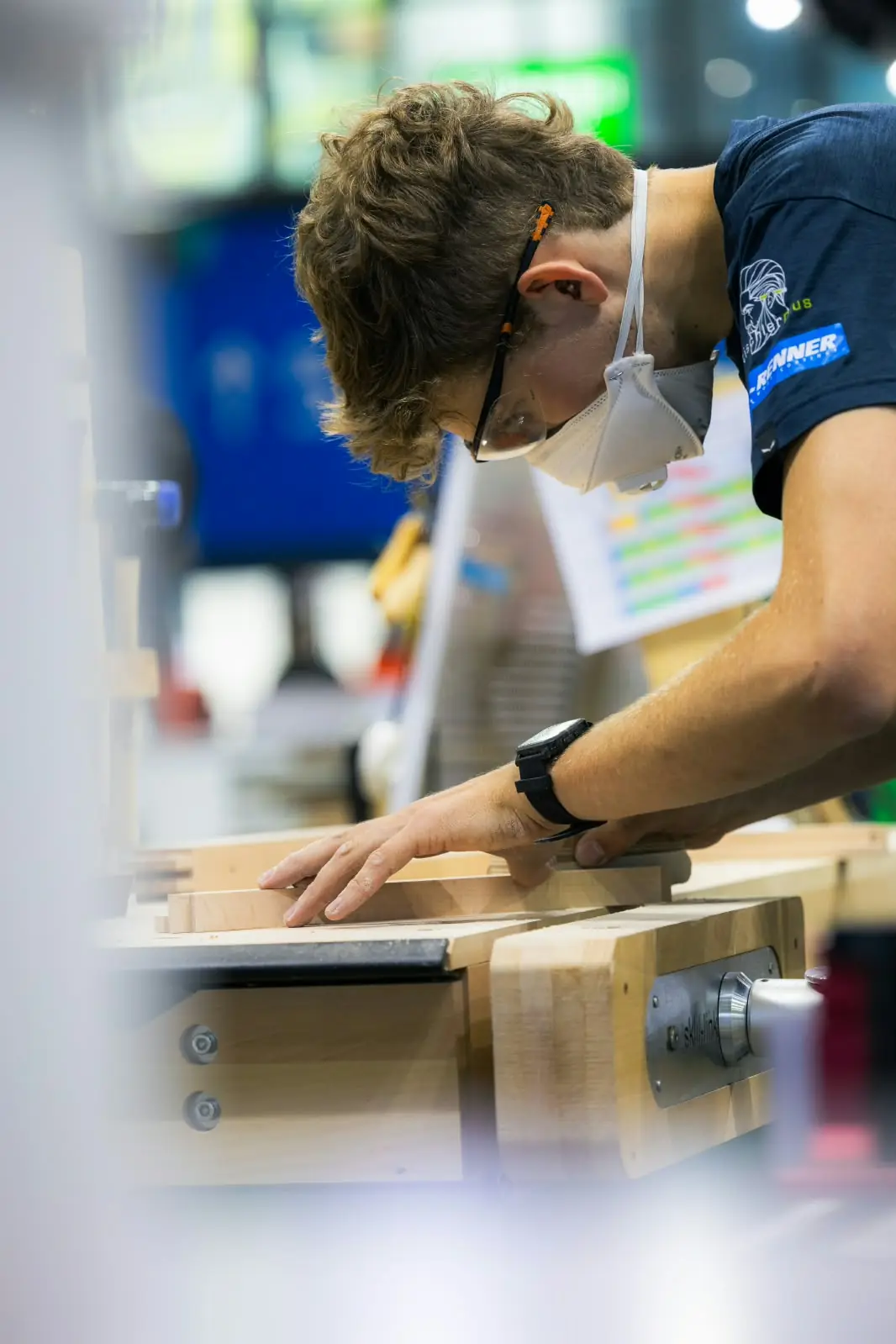
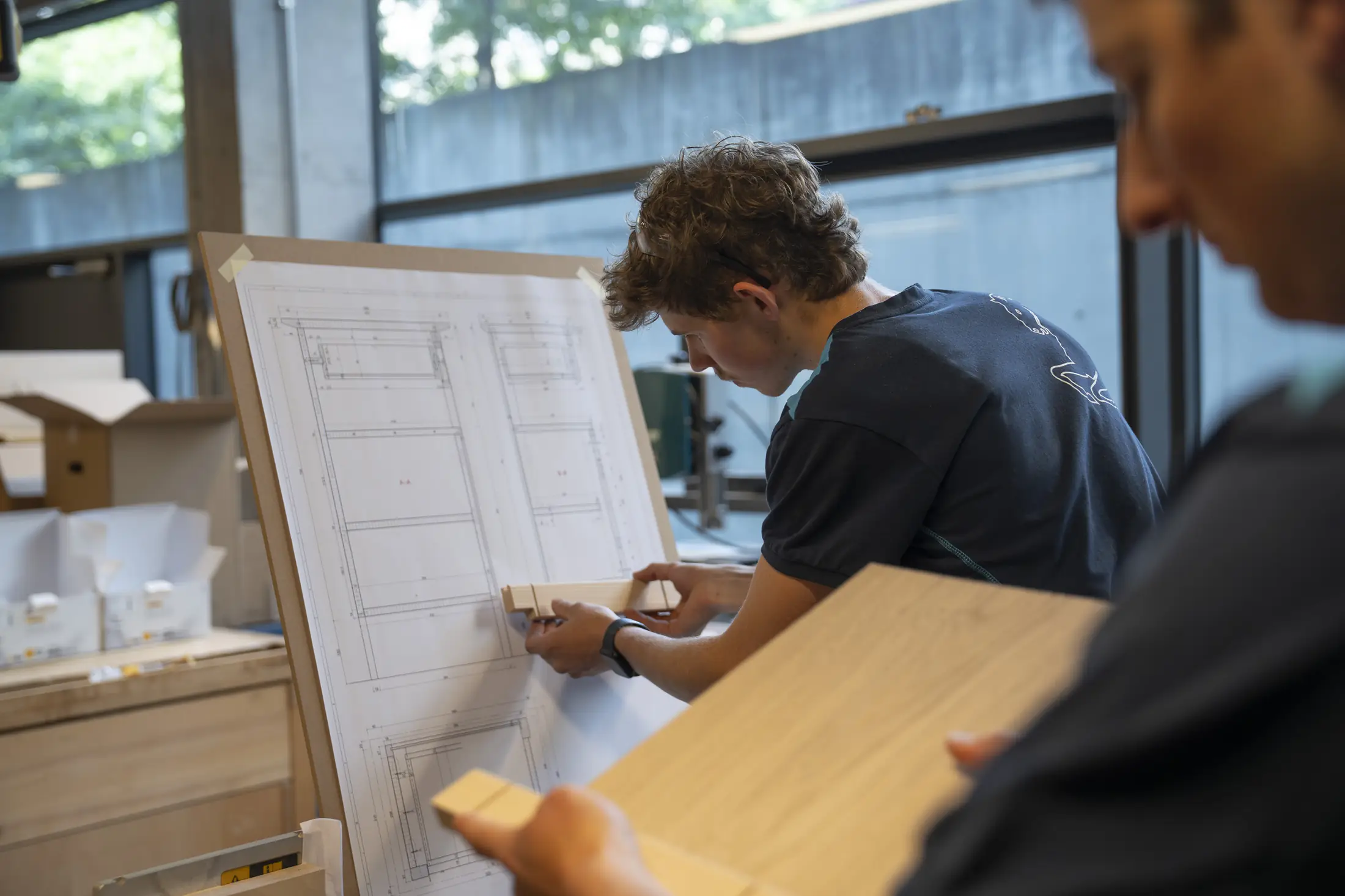
The workday begins with the project. We study the drawings, prepare the tools, and plan the sequence. At WorldSkills, after all, you don’t compete with a finished object. You compete with your ability to tackle a technical task, interpret it quickly, and execute it to the highest standards.
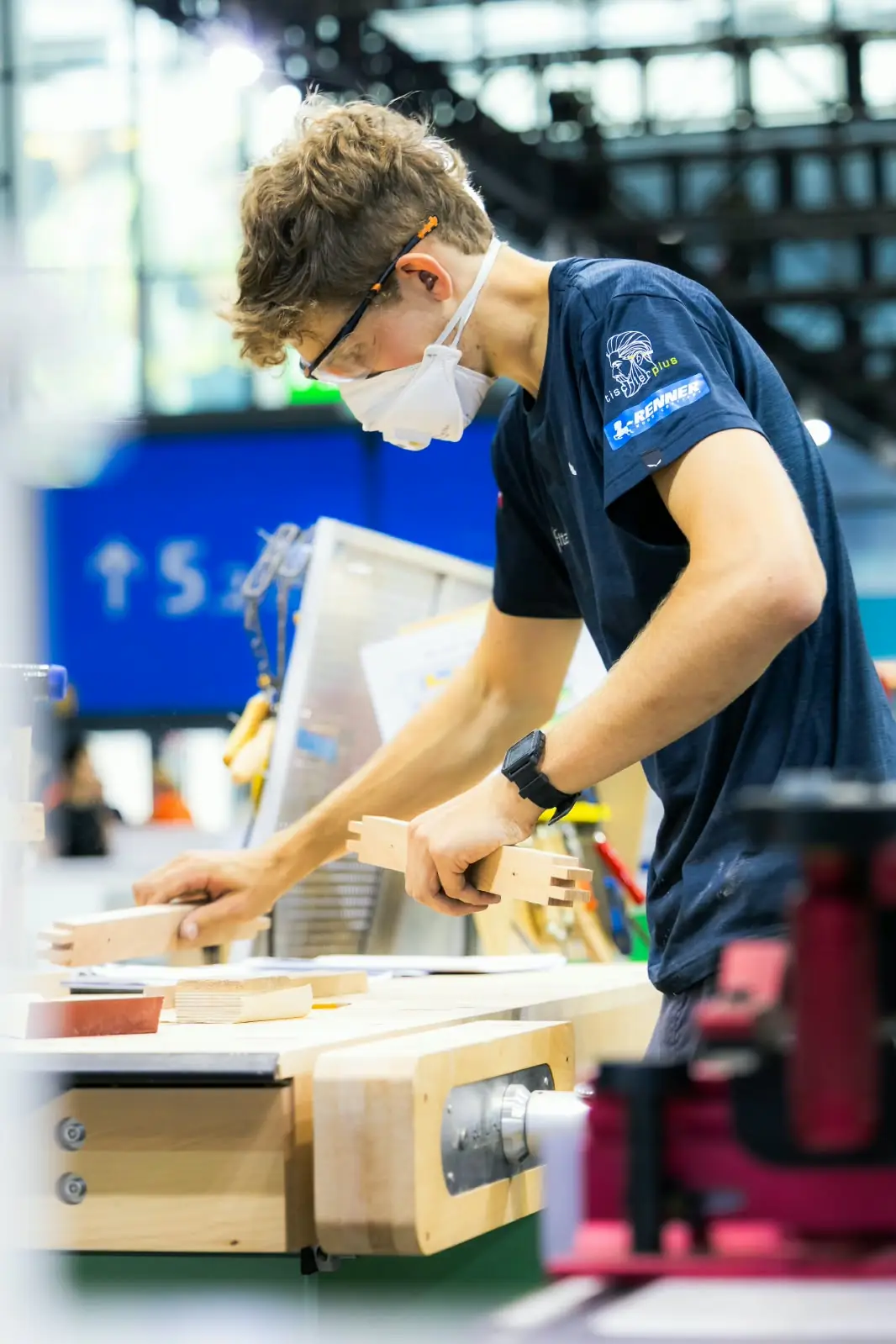
That’s why Jonas and Jonas also practice on projects from previous years. For example, a piece of furniture inspired by the 2019 Ireland competition: a cabinet with a drawer, doors, dovetail joints, tenons and mortises, a shelf, and inlay work. It’s not just an aesthetic exercise, but a roadmap of skills.
Every part of the piece of furniture becomes a test within a test. The drawer tests the precision of the joints. The doors test the alignment. The shelf tests the ability to fit an element neatly. The inlay tests control, patience, and a sense of composition. The final assembly reveals whether everything done before was truly correct.
This is where woodworking reveals its most demanding side. It does not tolerate sloppiness, but rewards those who know how to create order.
From the first cuts to the finish
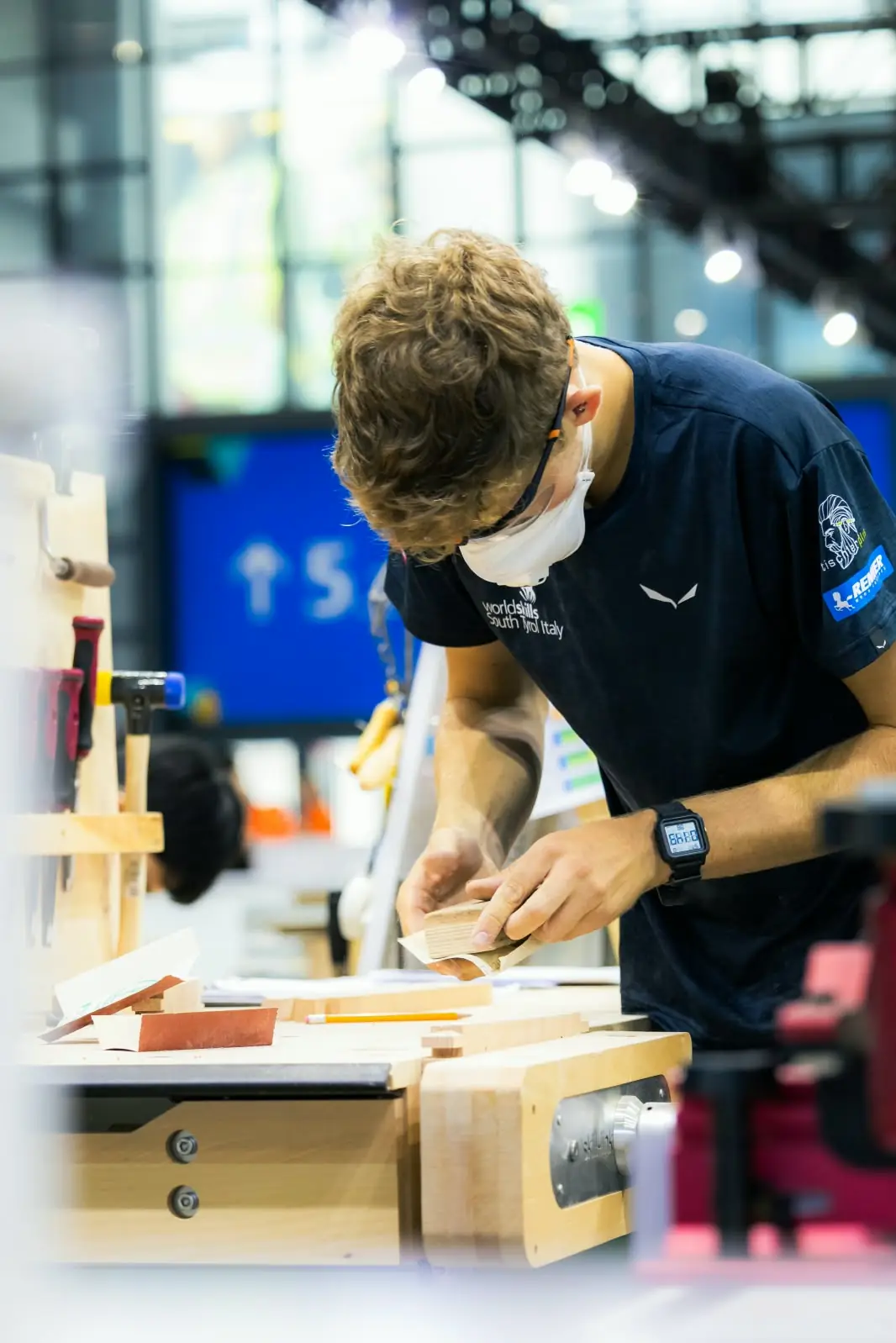
There is one step that holds special significance for Renner Italia. Jonas Prinoth explains that many aspects are evaluated at WorldSkills: from the initial cuts to planing, from painting to assembly.
And when it comes to coating, he says something that seems tailor-made to capture the essence of our work: «Coating the furniture is very important because it makes it more durable and brings out the beauty of the wood.»
These words capture the essence of the finish. It is not a final touch, not merely a coating, not a minor detail. The finish is protection, durability, aesthetics, texture, and light. It is what allows the wood to withstand the test of time and, at the same time, to reveal its true nature.
This is why Renner Italia feels such a strong connection to the journey of the Woodworking Team. Because the culture of finishing stems from the same respect for wood that drives a young woodworker at his workbench. The best finish does not obscure the material—it preserves it. It does not hide the craftsman’s touch—it enhances it. It does not replace craftsmanship—it complements it.
An ancient
and highly sought-after profession
Jonas Wenter talks about how carpentry is often perceived. He says that many parents want their children to have a comfortable life and, for that very reason, discourage them from pursuing a manual profession.
Then comes the most powerful line: «This mindset is wrong»
This statement goes beyond the story of a single young man. It touches on a crucial cultural issue: the future of Italian craftsmanship. If young people turn away from the workshop, we don’t just lose a workforce. We lose technical knowledge. We lose languages. We lose the ability to transform real materials into durable objects. We lose a part of what it means to be “Made in Italy.”
Jonas puts it simply: carpentry is «an ancient and highly sought-after profession». Ancient, because it carries with it a deep-rooted tradition. Sought-after, because the market needs skilled, precise, and reliable people. Young professionals who know how to use their hands and technology, read a drawing and interpret a material, and build quality in an age when quality is increasingly rare.
Renner Italia supports this vision. For us, promoting the woodworking trade means upholding a manufacturing culture that has made Italy renowned worldwide: well-designed furniture, meticulously finished surfaces, the subtle details that make all the difference, and the beauty that stems from craftsmanship.
The future of woodworking
Today, carpentry is no longer what it used to be. The machinery has changed. Technology has found its way into the workshops. The processes have become more precise, faster and more advanced. But what remains irreplaceable is the craftsman’s sensitivity.
A machine can cut, mill and sand. But it cannot feel the wood. It cannot recognise the beauty of a finish, assess its smoothness or understand whether a piece of work is truly well made. It cannot compete with a person’s ability to breathe life into an object.
Contemporary joinery is born from the meeting of technology and experience, mind and body, knowledge and manual skill.
This is the vision of Michael Gruber, president of the South Tyrolean Carpenters’ Association and the Confartigianato Wood Group. After years of experience in the trade and within the world of associations, he describes the carpenter as a precise and down-to-earth figure, capable of working with materials, but also of listening to people. A professional who does not merely build furniture, but who develops sincere relationships with those who wish to give shape to their vision of home.
This new approach to craftsmanship is embodied in the talent of Jonas Wenter, a young man from South Tyrol who will represent Italy at the 2026 WorldSkills in Shanghai. In the profile drawn up by Michael Gruber, Jonas emerges as a determined young man, blessed with exceptional manual dexterity and the maturity required to tackle a world-class competition.
Just like the growth of a tree, Jonas’s development as a craftsman has required time, care and perseverance. Training and attention to detail have never been lacking. On this journey, where technical skill meets the sensitivity needed to transform raw materials into something unique, Jonas is supported by Renner Italia, which backs his preparation and helps make his participation in the international competition possible.
According to Gruber, this support is essential for tackling a challenge of this calibre:
“Without the support of professional companies such as Renner Italia, participating in WorldSkills would be impossible. Their involvement is crucial in guiding young craftspeople through such a demanding journey.”
In Shanghai, that journey was vindicated on the competition floor with the winning of the World bronze medal.
“Made in Italy”
begins before
the design
Often, “Made in Italy” is only highlighted once the product is finished: a kitchen that’s been installed, a piece of furniture captured in a photo, a flawless surface under the light. But there’s much more to it before that moment.
There is a school. There is a workbench. There is a raw table. There is someone measuring, cutting, checking, and starting over. There is a skill that cannot be improvised or bought. There is a network of companies, artisans, technicians, trainers, and manufacturers of materials and technologies.
Renner Italia is part of this supply chain. Supporting Jonas Wenter and the Italian team of woodworkers means supporting everything that comes before the finished product. It means valuing training, precision, discipline, and knowledge of materials. It means recognizing that skilled manual labor is not a fallback option, but one of the most important assets in our production system.
“Made in Italy” isn’t just about style. It’s about method. It’s about expertise. It’s about a commitment to the materials. It’s about the ability to do even the unseen details well.

From preparation to the podium
Shanghai was the culmination of months of preparation. But the medal won by Jonas Wenter was not achieved solely during the days of the competition.
It was built up, training session after training session, trial after trial, mistake after mistake.
Amidst the noise of the machines. In the silence before a cut. In the concentration of a hand guiding the tool. In the decision to redo a detail because it is not yet precise enough. In the patience of a coach who observes and corrects.
All that hard work took Jonas to the podium at WorldSkills Shanghai 2026: a bronze medal in the Cabinetmaking category. A result that speaks not only to the talent of a young craftsman, but also to the value of education, training and a work ethic in which every millimetre can make all the difference.
Renner Italia supports
the Italian woodworking
Being the main sponsor of the Italian Carpenters’ Team at WorldSkills Shanghai 2026 has meant reaffirming a deep connection with the world of wood. Renner Italia works every day alongside carpenters, craftspeople and industries that give shape to Italian quality. This is why our involvement in this journey is not merely a symbolic gesture, but a natural extension of our identity.
We believe in young people who choose a trade. We believe in schools that teach practical skills. We believe in joinery as a masterful art form of ‘Made in Italy’. We believe in finishing as both a technical and cultural act: the moment when wood is protected, enhanced and entrusted to the test of time.
In Shanghai, Jonas Wenter brought his own talent with him. But he also brought a greater story: that of a generation capable of restoring strength, prestige and a future to the trades.
Renner Italia has been and will continue to be by his side. Because the future of wood lies with those who know how to work with it. And with those who choose to support it.